

When most people think about renting an RV, they think about vacations, camping, beaches, national parks, and family road trips.
But there is another reason people rent RVs that doesn’t get talked about nearly as much: medical travel.
At Palm Harbor RV Rentals, we have had families rent our campervans and smaller motorhomes to travel hundreds of miles for medical procedures, surgery, recovery, and to bring an elderly family member home.
These aren’t typical vacations. Sometimes the person traveling simply can’t sit upright in a car for hours at a time. Someone recovering from back, neck, or head surgery may need to lie down during the trip. An older family member may not have the stamina to spend an entire day traveling by car or airplane.
An RV can give a family another option.
Instead of being confined to a passenger seat, the person can have access to a bed, a bathroom, air conditioning, and the ability to stop and rest according to their needs.
Every situation is different, but after seeing how families have used our RVs for these trips, we’ve learned that the right RV can make a difficult journey considerably easier to manage.
Why Would Someone Rent an RV for Medical Travel?
The biggest reason is simple: a person may not be able to comfortably sit in a car for a long period of time.
We’ve had people traveling for surgery who couldn’t sit upright for more than about 20 minutes at a time. After certain back procedures, for example, sitting for an extended period can be extremely uncomfortable.
An airplane isn’t necessarily a good solution either. Once you’re on an airplane, you can’t simply pull over when you need to rest, change positions, or use a private bathroom.
An RV gives the family considerably more flexibility.
Depending on the RV, the passenger may have:
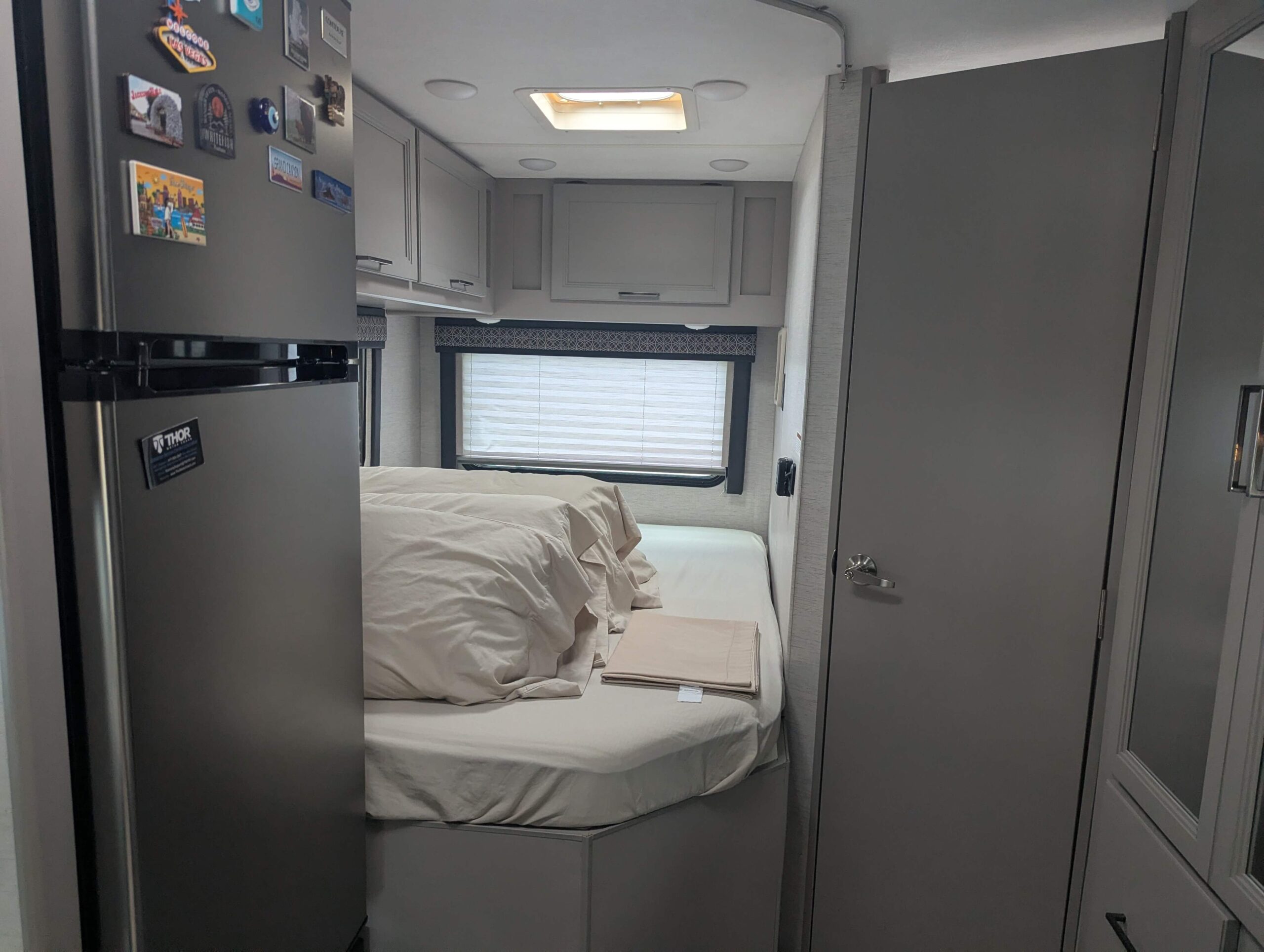
- A bed where they can lie down
- A private bathroom
- Air conditioning
- A place for a caregiver to sit
- Onboard electrical power
- Storage for personal belongings
- The ability to stop whenever the driver and passenger need to stop
The purpose isn’t necessarily to make the trip luxurious. It’s to make the trip more manageable for someone who isn’t feeling well.
Some of These Trips Are Surprisingly Long
We’ve had customers take our RVs as far as Jacksonville and Long Island, New York for medical-related travel.
For someone leaving Palm Harbor, Florida, that’s a significant road trip under normal circumstances. For someone who has just had surgery or has difficulty sitting upright, it can be a completely different challenge.
That’s where having a bed inside the vehicle can become particularly valuable.
Instead of asking, “How long can the passenger sit in the car?” the family can plan the trip around the passenger’s actual needs.
The trip might take longer because they need more frequent stops. That’s okay.
The goal isn’t necessarily to get there as quickly as possible. The goal is to get the person there safely and as comfortably as practical.
Of course, anyone recovering from surgery or dealing with a medical condition should discuss travel plans with their healthcare provider and make sure they are medically cleared for the trip.
One Long-Distance Trip Can Involve Several Different Drivers
One of the most interesting examples we’ve seen was a family traveling all the way to Long Island.
The patient’s mother and brother drove her north in the RV. Once they reached Long Island, the uncle flew back to Florida.
The patient’s husband then flew from Florida to Long Island and drove his wife back home.
The mother remained with them.
This is one of the things that makes an RV particularly flexible for a family trip like this.
The same person doesn’t necessarily have to drive the RV from Florida to the destination and then drive it all the way back.
With authorized additional drivers, families can figure out an arrangement that works for their particular situation.
There isn’t necessarily one correct way to organize a trip like this.
One family might have a husband and wife traveling together. Another might have a parent, adult child, and patient. Another might have several family members who take turns driving.
The RV becomes the family’s transportation, sleeping space, and flexible travel environment all in one vehicle.
Campervan or Motorhome: Which Is Better for Medical Travel?
This is one of the questions we hear, and there isn’t one answer.
We’ve found that smaller RVs tend to work particularly well for these trips.
Our preference is generally toward campervans and smaller motorhomes in the 20- to 24-foot range.
Why?
Because you get many of the important benefits of an RV without having to drive a huge motorhome.
A smaller RV is generally easier to drive, easier to maneuver, and less intimidating for someone who hasn’t driven an RV before.
It can feel more like driving a large van or a small moving truck than driving one of the enormous motorhomes people sometimes picture when they hear the word “RV.”
And for a medical trip, you may not need a 35-foot motorhome.
You may simply need:
- A bed.
- A bathroom.
- Air conditioning.
- And enough room for the people traveling.
That’s one reason we tend to favor smaller RVs for these situations.
The Advantages of a Campervan
A campervan can be an excellent option when keeping the vehicle easy to drive is a priority.
Some advantages include:
- Easier driving and maneuverability
- Smaller overall size
- Generally better fuel economy than a larger motorhome
- Easier parking
- A more familiar driving experience for someone accustomed to driving a van
For some families, that’s exactly what they want.
They want enough RV functionality to make the medical trip manageable without feeling like they’re driving a large recreational vehicle.
The Advantages of a Small Motorhome
A small motorhome can provide some additional interior space and, depending on the floorplan, a different sleeping arrangement.
One of the biggest considerations can actually be where the bed is located and how high it is off the ground.
Many RVs have their largest bed in the rear. Because manufacturers use the space underneath the bed for storage, tanks, and other equipment, these beds can be relatively high.
For someone recovering from surgery or someone who has difficulty climbing, that can be a consideration.
Some RVs have steps to make the bed easier to access, but even with steps, climbing into a high bed isn’t ideal for everyone.
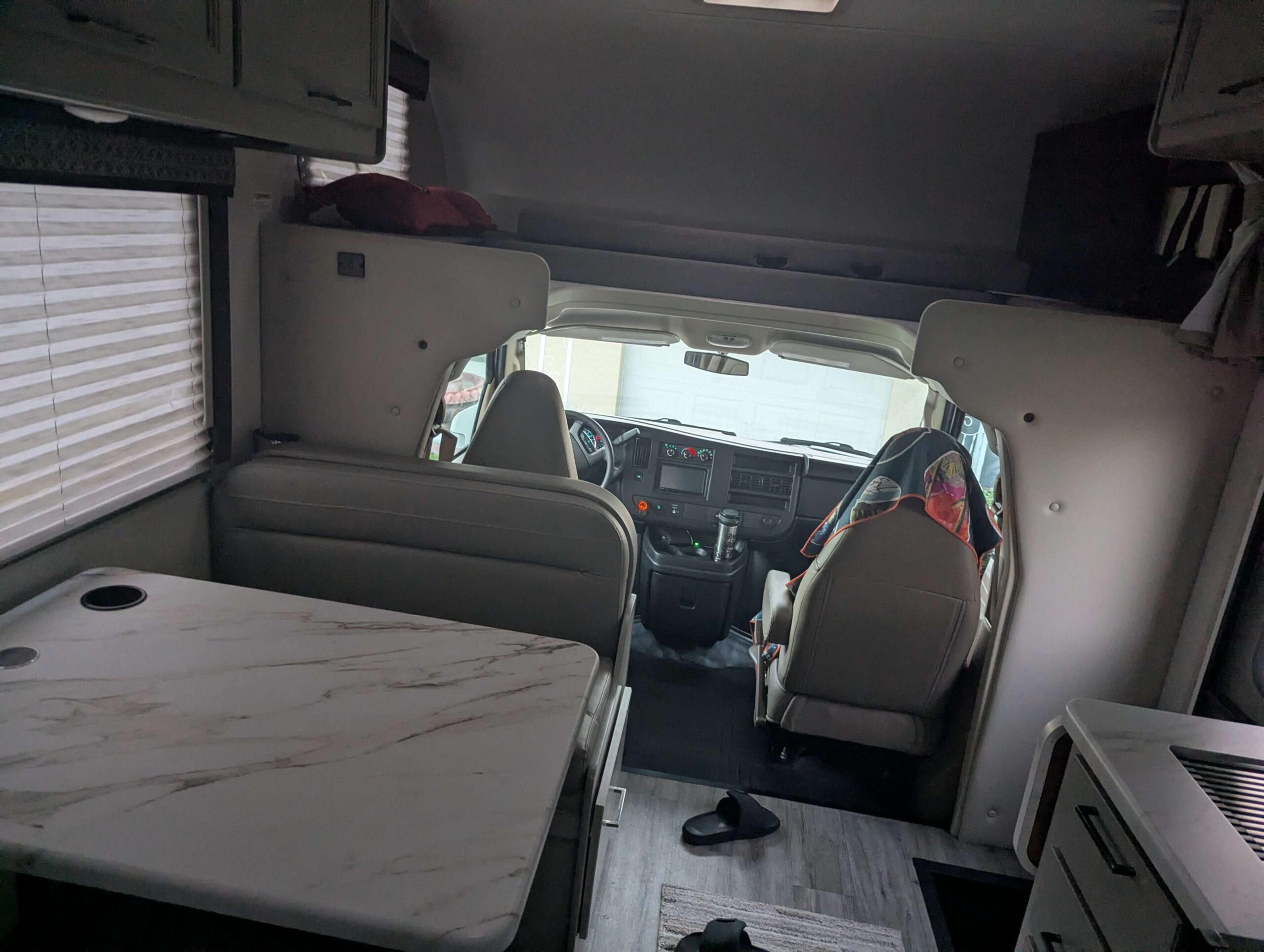
That’s where a motorhome with a dinette that converts into a bed can have an advantage.
The bed can be:
- Lower to the ground
- Easier to get into
- Closer to the driver
- More accessible for someone who has difficulty climbing
That last point can be particularly important.
A Real Example: One Jacksonville Customer Rented From Us Twice
We’ve had a customer use our RVs for medical travel twice.
The first time, they rented a campervan.
About six months later, they rented from us again, but this time they chose a larger motorhome.
The first RV worked, but they learned something from the experience.
For their second trip, they wanted more interior space and preferred having a bed that was closer to the driver and lower to the ground.
The motorhome’s dinette-bed arrangement was a better fit for what they needed.
This is a good example of why we don’t believe there is one “best RV” for every medical trip.
The right choice depends on who is traveling and what that person needs.
The Bathroom Can Be One of the Most Important Features
When you’re traveling with someone who is healthy and taking a normal road trip, stopping at a rest area every couple of hours isn’t a big deal.
After surgery, it can be a completely different story.
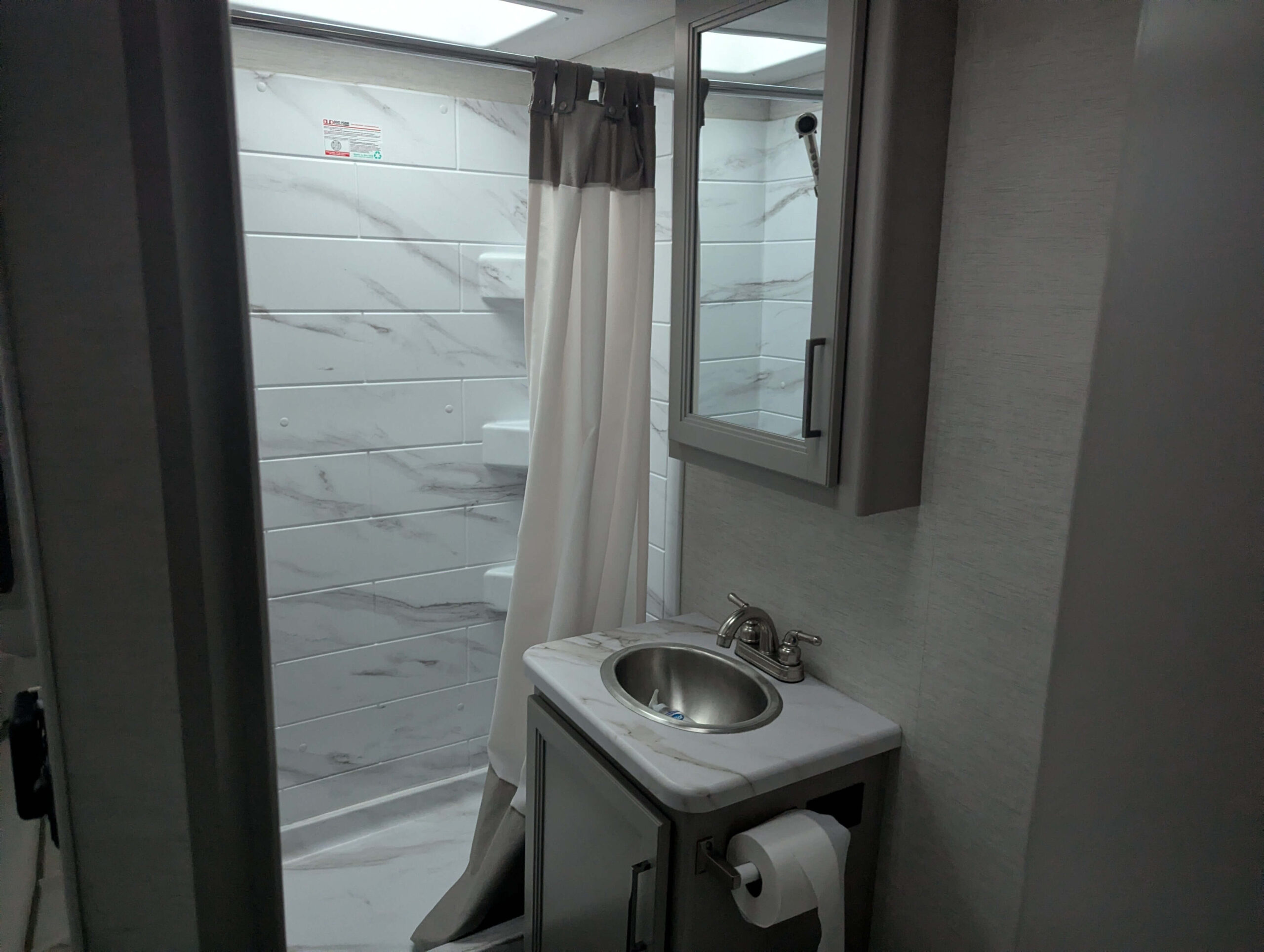
Having a bathroom inside the RV means the passenger doesn’t necessarily have to get out of the vehicle every time they need to use the restroom.
That can reduce unnecessary movement and make the trip easier to manage.
For someone recovering from a back, neck, or other procedure, minimizing unnecessary movement can be especially important.
The bathroom may not sound like the most exciting feature of an RV, but when you’re transporting someone who isn’t feeling well, it can be one of the features you appreciate the most.
The Bed May Be Even More Important
For medical travel, the sleeping arrangement isn’t simply about getting a good night’s sleep.
Sometimes the passenger needs somewhere to lie down during the actual drive.
That’s a major difference between traveling in an RV and traveling in a normal passenger vehicle.
Instead of being confined to a seat for hours, the passenger may be able to rest on the bed while another family member drives.
The exact setup depends on the RV and the passenger’s circumstances, but having that flexibility is one of the primary reasons families consider an RV for long-distance medical travel.
Don’t Underestimate the Value of Air Conditioning
If you’re leaving Florida, air conditioning matters.
Florida is warm much of the year, and a person recovering from surgery or dealing with a medical issue may be particularly uncomfortable in heat.
Our RVs are equipped with systems designed to provide the comfort people expect from an RV, and depending on the specific vehicle, onboard power can come from a generator or an inverter.
This allows the RV’s systems to operate while traveling, depending on the vehicle and its equipment.
If someone needs electrical power for medical equipment, however, that’s something the family should discuss with their healthcare provider and verify against the specific RV’s electrical capabilities before the trip.
Sometimes Three People Are Better Than Two
One thing we’ve learned from these trips is that the ideal arrangement isn’t always just the patient and the driver.
If possible, three people can be a very practical arrangement for a post-surgery trip.
- The driver can concentrate on driving.
- The patient can concentrate on resting.
- And the third person can help the patient, handle things inside the RV, and assist when the patient needs something.
That’s particularly helpful when the patient’s bed is toward the back of the RV.
The farther away the patient is from the driver, the more useful it can be to have another person available.
Every situation is different, of course, and some families may be perfectly comfortable traveling with two people.
What Happens While the Patient Is in the Hospital?
Renting an RV doesn’t necessarily mean the family has to live in it for the entire medical trip.
In our experience, families often stay at a hotel near the hospital while their loved one is receiving treatment.
Some may stay with the patient at the hospital.
Others may use the RV for a night or two.
And some families may choose to stay in the RV more extensively.
It’s completely up to the family and what works for their circumstances.
We’ve even had a situation where the wife was staying in a small hospital room and her husband couldn’t stay there overnight. He needed somewhere to sleep for one night, so he stayed in the RV in the parking area.
For him, the RV simply provided a comfortable place to sleep when he needed it.
That’s another advantage of having the RV available: you don’t necessarily have to use it the same way every day.
How Long Do People Rent an RV for Medical Travel?
Our medical-related rentals have generally ranged from about three nights to two weeks.
That makes sense because medical trips can be unpredictable.
A procedure might require a short trip. Another situation might involve a longer recovery period. Someone traveling to another state may need time on both ends of the appointment or surgery.
An RV rental can provide the flexibility to build the trip around the family’s schedule rather than trying to fit everything into a fixed airline itinerary.
Picking Up the RV in Palm Harbor
For customers picking up an RV from us, we don’t simply hand them the keys and send them down the road.
We walk them through the RV.
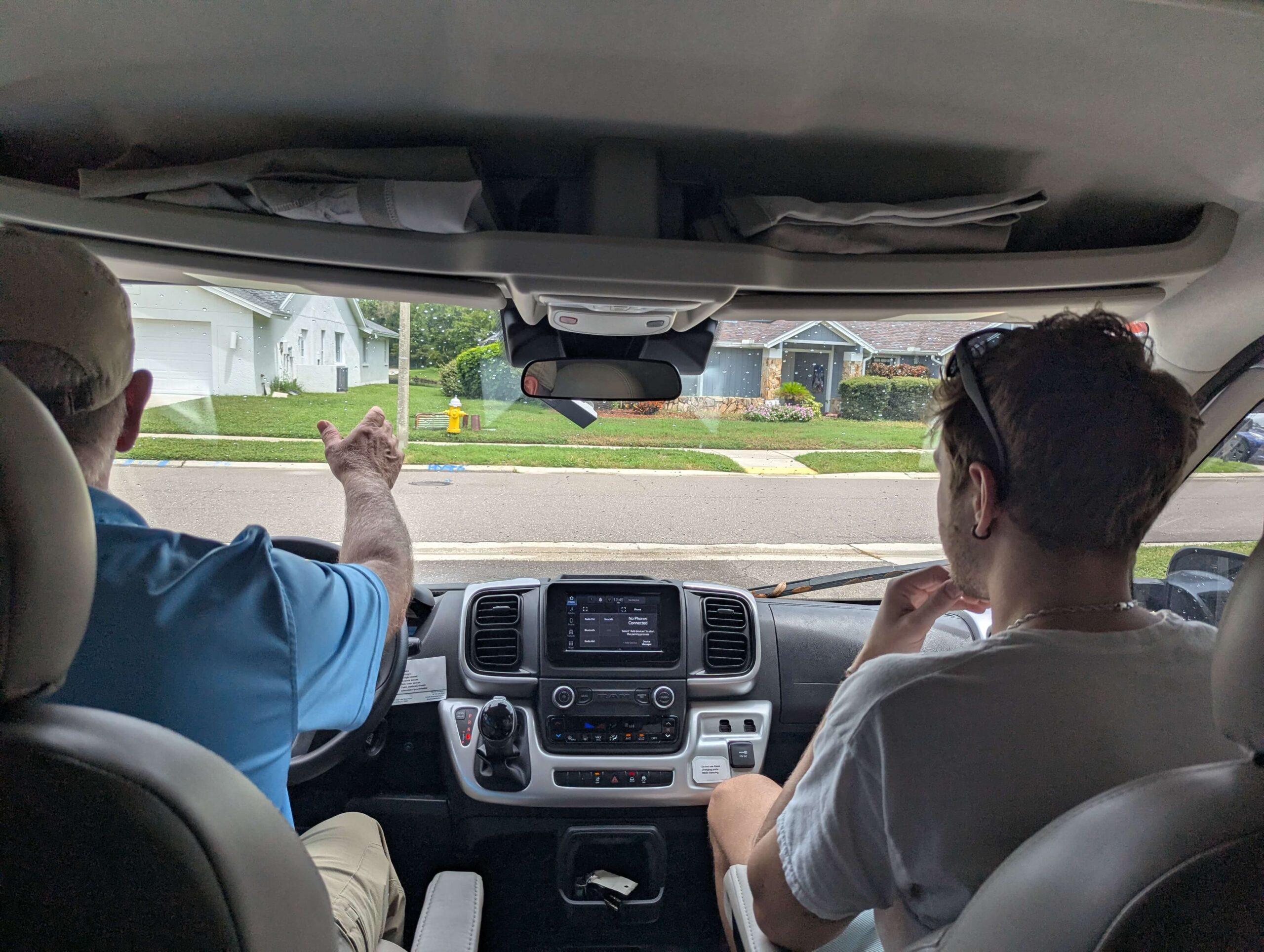
We explain how to drive it, how the systems work, and what they need to know before leaving.
For someone who hasn’t driven an RV before, that orientation is important.
The goal is for the driver to leave knowing how to operate the vehicle and understanding the basic systems before beginning a long trip.
In some circumstances, we can also arrange delivery.
For example, one of our Jacksonville customers had the RV delivered to their home before beginning their trip.
Do You Need a Special License to Drive a Small RV?
For the smaller rental RVs we’re discussing here, a special commercial driver’s license generally isn’t required.
These vehicles are designed to be driven by ordinary drivers, and the experience is much closer to driving a large van or small moving truck than driving a commercial bus.
The exact licensing requirements can depend on the particular vehicle and applicable laws, so we always recommend confirming the requirements for the specific RV you’re renting.
When most people think about renting an RV, they think about vacations, camping, beaches, national parks, and family road trips.
But there is another reason people rent RVs that doesn’t get talked about nearly as much: medical travel.
At Palm Harbor RV Rentals, we have had families rent our campervans and smaller motorhomes to travel hundreds of miles for medical procedures, surgery, recovery, and to bring an elderly family member home.
These aren’t typical vacations. Sometimes the person traveling simply can’t sit upright in a car for hours at a time. Someone recovering from back, neck, or head surgery may need to lie down during the trip. An older family member may not have the stamina to spend an entire day traveling by car or airplane.
An RV can give a family another option.
Instead of being confined to a passenger seat, the person can have access to a bed, a bathroom, air conditioning, and the ability to stop and rest according to their needs.
Every situation is different, but after seeing how families have used our RVs for these trips, we’ve learned that the right RV can make a difficult journey considerably easier to manage.
Why Would Someone Rent an RV for Medical Travel?
The biggest reason is simple: a person may not be able to comfortably sit in a car for a long period of time.
We’ve had people traveling for surgery who couldn’t sit upright for more than about 20 minutes at a time. After certain back procedures, for example, sitting for an extended period can be extremely uncomfortable.
An airplane isn’t necessarily a good solution either. Once you’re on an airplane, you can’t simply pull over when you need to rest, change positions, or use a private bathroom.
An RV gives the family considerably more flexibility.
Depending on the RV, the passenger may have:
- A bed where they can lie down
- A private bathroom
- Air conditioning
- A place for a caregiver to sit
- Onboard electrical power
- Storage for personal belongings
- The ability to stop whenever the driver and passenger need to stop
The purpose isn’t necessarily to make the trip luxurious. It’s to make the trip more manageable for someone who isn’t feeling well.
Some of These Trips Are Surprisingly Long
We’ve had customers take our RVs as far as Jacksonville and Long Island, New York for medical-related travel.
For someone leaving Palm Harbor, Florida, that’s a significant road trip under normal circumstances. For someone who has just had surgery or has difficulty sitting upright, it can be a completely different challenge.
That’s where having a bed inside the vehicle can become particularly valuable.
Instead of asking, “How long can the passenger sit in the car?” the family can plan the trip around the passenger’s actual needs.
The trip might take longer because they need more frequent stops. That’s okay.
The goal isn’t necessarily to get there as quickly as possible. The goal is to get the person there safely and as comfortably as practical.
Of course, anyone recovering from surgery or dealing with a medical condition should discuss travel plans with their healthcare provider and make sure they are medically cleared for the trip.
One Long-Distance Trip Can Involve Several Different Drivers
One of the most interesting examples we’ve seen was a family traveling all the way to Long Island.
The patient’s mother and brother drove her north in the RV. Once they reached Long Island, the uncle flew back to Florida.
The patient’s husband then flew from Florida to Long Island and drove his wife back home.
The mother remained with them.
This is one of the things that makes an RV particularly flexible for a family trip like this.
The same person doesn’t necessarily have to drive the RV from Florida to the destination and then drive it all the way back.
With authorized additional drivers, families can figure out an arrangement that works for their particular situation.
There isn’t necessarily one correct way to organize a trip like this.
One family might have a husband and wife traveling together. Another might have a parent, adult child, and patient. Another might have several family members who take turns driving.
The RV becomes the family’s transportation, sleeping space, and flexible travel environment all in one vehicle.
Campervan or Motorhome: Which Is Better for Medical Travel?
This is one of the questions we hear, and there isn’t one answer.
We’ve found that smaller RVs tend to work particularly well for these trips.
Our preference is generally toward campervans and smaller motorhomes in the 20- to 24-foot range.
Why?
Because you get many of the important benefits of an RV without having to drive a huge motorhome.
A smaller RV is generally easier to drive, easier to maneuver, and less intimidating for someone who hasn’t driven an RV before.
It can feel more like driving a large van or a small moving truck than driving one of the enormous motorhomes people sometimes picture when they hear the word “RV.”
And for a medical trip, you may not need a 35-foot motorhome.
You may simply need:
- A bed.
- A bathroom.
- Air conditioning.
- And enough room for the people traveling.
That’s one reason we tend to favor smaller RVs for these situations.
The Advantages of a Campervan
A campervan can be an excellent option when keeping the vehicle easy to drive is a priority.
Some advantages include:
- Easier driving and maneuverability
- Smaller overall size
- Generally better fuel economy than a larger motorhome
- Easier parking
- A more familiar driving experience for someone accustomed to driving a van
For some families, that’s exactly what they want.
They want enough RV functionality to make the medical trip manageable without feeling like they’re driving a large recreational vehicle.
The Advantages of a Small Motorhome
A small motorhome can provide some additional interior space and, depending on the floorplan, a different sleeping arrangement.
One of the biggest considerations can actually be where the bed is located and how high it is off the ground.
Many RVs have their largest bed in the rear. Because manufacturers use the space underneath the bed for storage, tanks, and other equipment, these beds can be relatively high.
For someone recovering from surgery or someone who has difficulty climbing, that can be a consideration.
Some RVs have steps to make the bed easier to access, but even with steps, climbing into a high bed isn’t ideal for everyone.
That’s where a motorhome with a dinette that converts into a bed can have an advantage.
The bed can be:
- Lower to the ground
- Easier to get into
- Closer to the driver
- More accessible for someone who has difficulty climbing
That last point can be particularly important.
A Real Example: One Jacksonville Customer Rented From Us Twice
We’ve had a customer use our RVs for medical travel twice.
The first time, they rented a campervan.
About six months later, they rented from us again, but this time they chose a larger motorhome.
The first RV worked, but they learned something from the experience.
For their second trip, they wanted more interior space and preferred having a bed that was closer to the driver and lower to the ground.
The motorhome’s dinette-bed arrangement was a better fit for what they needed.
This is a good example of why we don’t believe there is one “best RV” for every medical trip.
The right choice depends on who is traveling and what that person needs.
The Bathroom Can Be One of the Most Important Features
When you’re traveling with someone who is healthy and taking a normal road trip, stopping at a rest area every couple of hours isn’t a big deal.
After surgery, it can be a completely different story.
Having a bathroom inside the RV means the passenger doesn’t necessarily have to get out of the vehicle every time they need to use the restroom.
That can reduce unnecessary movement and make the trip easier to manage.
For someone recovering from a back, neck, or other procedure, minimizing unnecessary movement can be especially important.
The bathroom may not sound like the most exciting feature of an RV, but when you’re transporting someone who isn’t feeling well, it can be one of the features you appreciate the most.
The Bed May Be Even More Important
For medical travel, the sleeping arrangement isn’t simply about getting a good night’s sleep.
Sometimes the passenger needs somewhere to lie down during the actual drive.
That’s a major difference between traveling in an RV and traveling in a normal passenger vehicle.
Instead of being confined to a seat for hours, the passenger may be able to rest on the bed while another family member drives.
The exact setup depends on the RV and the passenger’s circumstances, but having that flexibility is one of the primary reasons families consider an RV for long-distance medical travel.
Don’t Underestimate the Value of Air Conditioning
If you’re leaving Florida, air conditioning matters.
Florida is warm much of the year, and a person recovering from surgery or dealing with a medical issue may be particularly uncomfortable in heat.
Our RVs are equipped with systems designed to provide the comfort people expect from an RV, and depending on the specific vehicle, onboard power can come from a generator or an inverter.
This allows the RV’s systems to operate while traveling, depending on the vehicle and its equipment.
If someone needs electrical power for medical equipment, however, that’s something the family should discuss with their healthcare provider and verify against the specific RV’s electrical capabilities before the trip.
Sometimes Three People Are Better Than Two
One thing we’ve learned from these trips is that the ideal arrangement isn’t always just the patient and the driver.
If possible, three people can be a very practical arrangement for a post-surgery trip.
- The driver can concentrate on driving.
- The patient can concentrate on resting.
- And the third person can help the patient, handle things inside the RV, and assist when the patient needs something.
That’s particularly helpful when the patient’s bed is toward the back of the RV.
The farther away the patient is from the driver, the more useful it can be to have another person available.
Every situation is different, of course, and some families may be perfectly comfortable traveling with two people.
What Happens While the Patient Is in the Hospital?
Renting an RV doesn’t necessarily mean the family has to live in it for the entire medical trip.
In our experience, families often stay at a hotel near the hospital while their loved one is receiving treatment.
Some may stay with the patient at the hospital.
Others may use the RV for a night or two.
And some families may choose to stay in the RV more extensively.
It’s completely up to the family and what works for their circumstances.
We’ve even had a situation where the wife was staying in a small hospital room and her husband couldn’t stay there overnight. He needed somewhere to sleep for one night, so he stayed in the RV in the parking area.
For him, the RV simply provided a comfortable place to sleep when he needed it.
That’s another advantage of having the RV available: you don’t necessarily have to use it the same way every day.
How Long Do People Rent an RV for Medical Travel?
Our medical-related rentals have generally ranged from about three nights to two weeks.
That makes sense because medical trips can be unpredictable.
A procedure might require a short trip. Another situation might involve a longer recovery period. Someone traveling to another state may need time on both ends of the appointment or surgery.
An RV rental can provide the flexibility to build the trip around the family’s schedule rather than trying to fit everything into a fixed airline itinerary.
Picking Up the RV in Palm Harbor
For customers picking up an RV from us, we don’t simply hand them the keys and send them down the road.
We walk them through the RV.
We explain how to drive it, how the systems work, and what they need to know before leaving.
For someone who hasn’t driven an RV before, that orientation is important.
The goal is for the driver to leave knowing how to operate the vehicle and understanding the basic systems before beginning a long trip.
In some circumstances, we can also arrange delivery.
For example, one of our Jacksonville customers had the RV delivered to their home before beginning their trip.
Do You Need a Special License to Drive a Small RV?
For the smaller rental RVs we’re discussing here, a special commercial driver’s license generally isn’t required.
These vehicles are designed to be driven by ordinary drivers, and the experience is much closer to driving a large van or small moving truck than driving a commercial bus.
The exact licensing requirements can depend on the particular vehicle and applicable laws, so we always recommend confirming the requirements for the specific RV you’re renting.
Is an RV Right for Your Medical Trip?
There isn’t one answer for every family.
Before renting an RV for medical travel, think about:
- How long can the passenger comfortably sit upright?
- Will they need to lie down during the trip?
- Can they climb steps?
- Would a lower bed be preferable?
- Is bathroom access important?
- Will someone need to help the passenger during the trip?
- How many people will be traveling?
- Who will drive?
- Will you need multiple authorized drivers?
- How far are you traveling?
- Will you need to stay overnight along the way?
- Does the passenger have any medical equipment requiring electrical power?
- Does the specific RV have the appropriate electrical capability?
- Has the patient’s healthcare provider cleared them for the trip?
The answers to those questions can help determine whether a campervan or small motorhome is the better fit.
Every Medical Travel Trip Is Different
That’s probably the biggest thing we’ve learned from renting RVs for these situations.
There isn’t a standard medical trip.
One family may be taking a campervan to Jacksonville. Another may be traveling all the way to Long Island. One person may need to lie down for most of the trip. Another may simply be an older family member who doesn’t have the stamina for a long car ride or airplane flight.
One family may have two people traveling. Another may have three or more.
Some people prefer a campervan because it’s easier to drive. Others appreciate the additional space and lower sleeping arrangement of a small motorhome.
The right RV depends on the person traveling, the people helping them, and the trip you’re trying to make.
Need an RV for a Medical Trip?
If you’re considering an RV rental for surgery, medical travel, an elderly family member, or another long-distance family trip, tell us about your situation.
Let us know:
- Where you’re going
- How many people are traveling
- How long you’ll be gone
- Whether the passenger needs to lie down
- Whether climbing steps is difficult
- Who will be driving
- And anything else that might affect the type of RV you need
At Palm Harbor RV Rentals, we specialize in smaller campervans and motorhomes that are easier to drive while still providing the basic comforts of an RV.
We’re based in Palm Harbor, Florida, and we’re happy to talk through the different options with you.
Sometimes the best RV isn’t the biggest one. It’s the one that fits the person who needs to make the trip.
Call 727-776-9248 or visit PalmHarborRVRentals.com to discuss your trip.
Is an RV Right for Your Medical Trip?
There isn’t one answer for every family.
Before renting an RV for medical travel, think about:
- How long can the passenger comfortably sit upright?
- Will they need to lie down during the trip?
- Can they climb steps?
- Would a lower bed be preferable?
- Is bathroom access important?
- Will someone need to help the passenger during the trip?
- How many people will be traveling?
- Who will drive?
- Will you need multiple authorized drivers?
- How far are you traveling?
- Will you need to stay overnight along the way?
- Does the passenger have any medical equipment requiring electrical power?
- Does the specific RV have the appropriate electrical capability?
- Has the patient’s healthcare provider cleared them for the trip?
The answers to those questions can help determine whether a campervan or small motorhome is the better fit.
Every Medical Travel Trip Is Different
That’s probably the biggest thing we’ve learned from renting RVs for these situations.
There isn’t a standard medical trip.
One family may be taking a campervan to Jacksonville. Another may be traveling all the way to Long Island. One person may need to lie down for most of the trip. Another may simply be an older family member who doesn’t have the stamina for a long car ride or airplane flight.
One family may have two people traveling. Another may have three or more.
Some people prefer a campervan because it’s easier to drive. Others appreciate the additional space and lower sleeping arrangement of a small motorhome.
The right RV depends on the person traveling, the people helping them, and the trip you’re trying to make.
Need an RV for a Medical Trip?
If you’re considering an RV rental for surgery, medical travel, an elderly family member, or another long-distance family trip, tell us about your situation.
Let us know:
- Where you’re going
- How many people are traveling
- How long you’ll be gone
- Whether the passenger needs to lie down
- Whether climbing steps is difficult
- Who will be driving
- And anything else that might affect the type of RV you need
At Palm Harbor RV Rentals, we specialize in smaller campervans and motorhomes that are easier to drive while still providing the basic comforts of an RV.
We’re based in Palm Harbor, Florida, and we’re happy to talk through the different options with you.
Sometimes the best RV isn’t the biggest one. It’s the one that fits the person who needs to make the trip.
Call 727-776-9248 or visit PalmHarborRVRentals.com to discuss your trip.