Using an RV for Medical Travel: When Flying or Sitting in a Car Isn’t Practical

When most people think about renting an RV, they think about vacations, camping, beaches, national parks, and family road trips.

But there is another reason people rent RVs that doesn’t get talked about nearly as much: medical travel.

At Palm Harbor RV Rentals, we have had families rent our campervans and smaller motorhomes to travel hundreds of miles for medical procedures, surgery, recovery, and to bring an elderly family member home.

These aren’t typical vacations. Sometimes the person traveling simply can’t sit upright in a car for hours at a time. Someone recovering from back, neck, or head surgery may need to lie down during the trip. An older family member may not have the stamina to spend an entire day traveling by car or airplane.

An RV can give a family another option.

Instead of being confined to a passenger seat, the person can have access to a bed, a bathroom, air conditioning, and the ability to stop and rest according to their needs.

Every situation is different, but after seeing how families have used our RVs for these trips, we’ve learned that the right RV can make a difficult journey considerably easier to manage.

Why Would Someone Rent an RV for Medical Travel?

The biggest reason is simple: a person may not be able to comfortably sit in a car for a long period of time.

We’ve had people traveling for surgery who couldn’t sit upright for more than about 20 minutes at a time. After certain back procedures, for example, sitting for an extended period can be extremely uncomfortable.

An airplane isn’t necessarily a good solution either. Once you’re on an airplane, you can’t simply pull over when you need to rest, change positions, or use a private bathroom.

An RV gives the family considerably more flexibility.

Depending on the RV, the passenger may have:

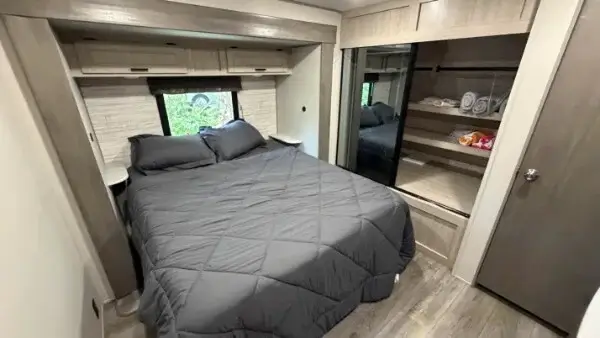
  • A bed where they can lie down
  • A private bathroom
  • Air conditioning
  • A place for a caregiver to sit
  • Onboard electrical power
  • Storage for personal belongings
  • The ability to stop whenever the driver and passenger need to stop

The purpose isn’t necessarily to make the trip luxurious. It’s to make the trip more manageable for someone who isn’t feeling well.

Some of These Trips Are Surprisingly Long

We’ve had customers take our RVs as far as Jacksonville and Long Island, New York for medical-related travel.

For someone leaving Palm Harbor, Florida, that’s a significant road trip under normal circumstances. For someone who has just had surgery or has difficulty sitting upright, it can be a completely different challenge.

That’s where having a bed inside the vehicle can become particularly valuable.

Instead of asking, “How long can the passenger sit in the car?” the family can plan the trip around the passenger’s actual needs.

The trip might take longer because they need more frequent stops. That’s okay.

The goal isn’t necessarily to get there as quickly as possible. The goal is to get the person there safely and as comfortably as practical.

Of course, anyone recovering from surgery or dealing with a medical condition should discuss travel plans with their healthcare provider and make sure they are medically cleared for the trip.
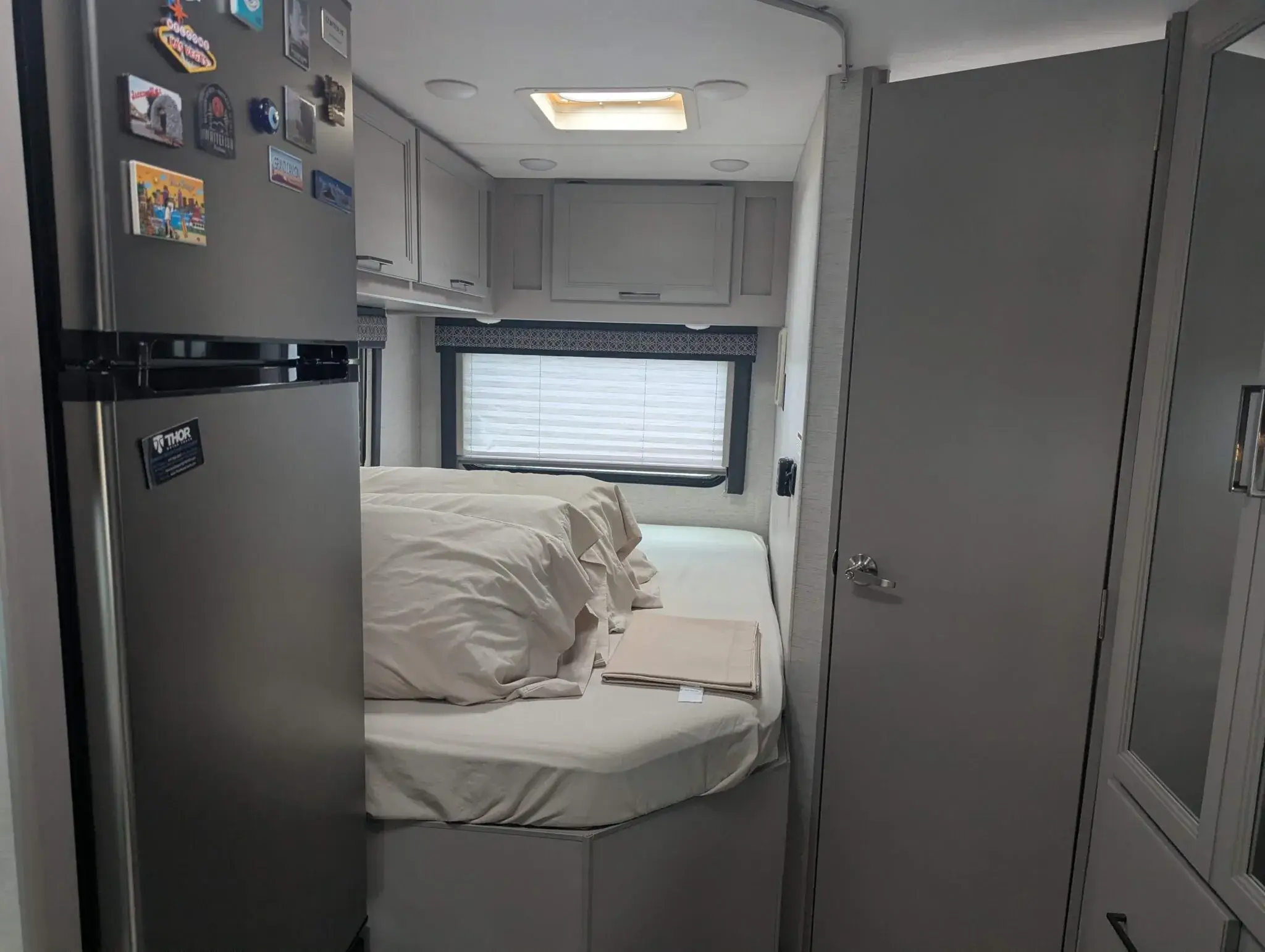
Small motorhome bedroom with bed, window, and overhead storage

One Long-Distance Trip Can Involve Several Different Drivers

One of the most interesting examples we’ve seen was a family traveling all the way to Long Island.

The patient’s mother and brother drove her north in the RV. Once they reached Long Island, the uncle flew back to Florida.

The patient’s husband then flew from Florida to Long Island and drove his wife back home.

The mother remained with them.

This is one of the things that makes an RV particularly flexible for a family trip like this.

The same person doesn’t necessarily have to drive the RV from Florida to the destination and then drive it all the way back.

With authorized additional drivers, families can figure out an arrangement that works for their particular situation.

There isn’t necessarily one correct way to organize a trip like this.

One family might have a husband and wife traveling together. Another might have a parent, adult child, and patient. Another might have several family members who take turns driving.

The RV becomes the family’s transportation, sleeping space, and flexible travel environment all in one vehicle.

Campervan or Motorhome: Which Is Better for Medical Travel?

This is one of the questions we hear, and there isn’t one answer.

We’ve found that smaller RVs tend to work particularly well for these trips.

Our preference is generally toward campervans and smaller motorhomes in the 20- to 24-foot range.

Why?

Because you get many of the important benefits of an RV without having to drive a huge motorhome.

A smaller RV is generally easier to drive, easier to maneuver, and less intimidating for someone who hasn’t driven an RV before.

It can feel more like driving a large van or a small moving truck than driving one of the enormous motorhomes people sometimes picture when they hear the word “RV.”

And for a medical trip, you may not need a 35-foot motorhome.

You may simply need:

  • A bed.
  • A bathroom.
  • Air conditioning.
  • And enough room for the people traveling.

That’s one reason we tend to favor smaller RVs for these situations.

The Advantages of a Campervan

A campervan can be an excellent option when keeping the vehicle easy to drive is a priority.

Some advantages include:

  • Easier driving and maneuverability
  • Smaller overall size
  • Generally better fuel economy than a larger motorhome
  • Easier parking
  • A more familiar driving experience for someone accustomed to driving a van

For some families, that’s exactly what they want.

They want enough RV functionality to make the medical trip manageable without feeling like they’re driving a large recreational vehicle.

The Advantages of a Small Motorhome

A small motorhome can provide some additional interior space and, depending on the floorplan, a different sleeping arrangement.

One of the biggest considerations can actually be where the bed is located and how high it is off the ground.

Many RVs have their largest bed in the rear. Because manufacturers use the space underneath the bed for storage, tanks, and other equipment, these beds can be relatively high.

For someone recovering from surgery or someone who has difficulty climbing, that can be a consideration.

Some RVs have steps to make the bed easier to access, but even with steps, climbing into a high bed isn’t ideal for everyone.

That’s where a motorhome with a dinette that converts into a bed can have an advantage.

The bed can be:

  • Lower to the ground
  • Easier to get into
  • Closer to the driver
  • More accessible for someone who has difficulty climbing

That last point can be particularly important.

A Real Example: One Jacksonville Customer Rented From Us Twice

We’ve had a customer use our RVs for medical travel twice.

The first time, they rented a campervan.

About six months later, they rented from us again, but this time they chose a larger motorhome.

The first RV worked, but they learned something from the experience.

For their second trip, they wanted more interior space and preferred having a bed that was closer to the driver and lower to the ground.

The motorhome’s dinette-bed arrangement was a better fit for what they needed.

This is a good example of why we don’t believe there is one “best RV” for every medical trip.

The right choice depends on who is traveling and what that person needs.

The Bathroom Can Be One of the Most Important Features

When you’re traveling with someone who is healthy and taking a normal road trip, stopping at a rest area every couple of hours isn’t a big deal.

After surgery, it can be a completely different story.

Having a bathroom inside the RV means the passenger doesn’t necessarily have to get out of the vehicle every time they need to use the restroom.

That can reduce unnecessary movement and make the trip easier to manage.

For someone recovering from a back, neck, or other procedure, minimizing unnecessary movement can be especially important.

The bathroom may not sound like the most exciting feature of an RV, but when you’re transporting someone who isn’t feeling well, it can be one of the features you appreciate the most.
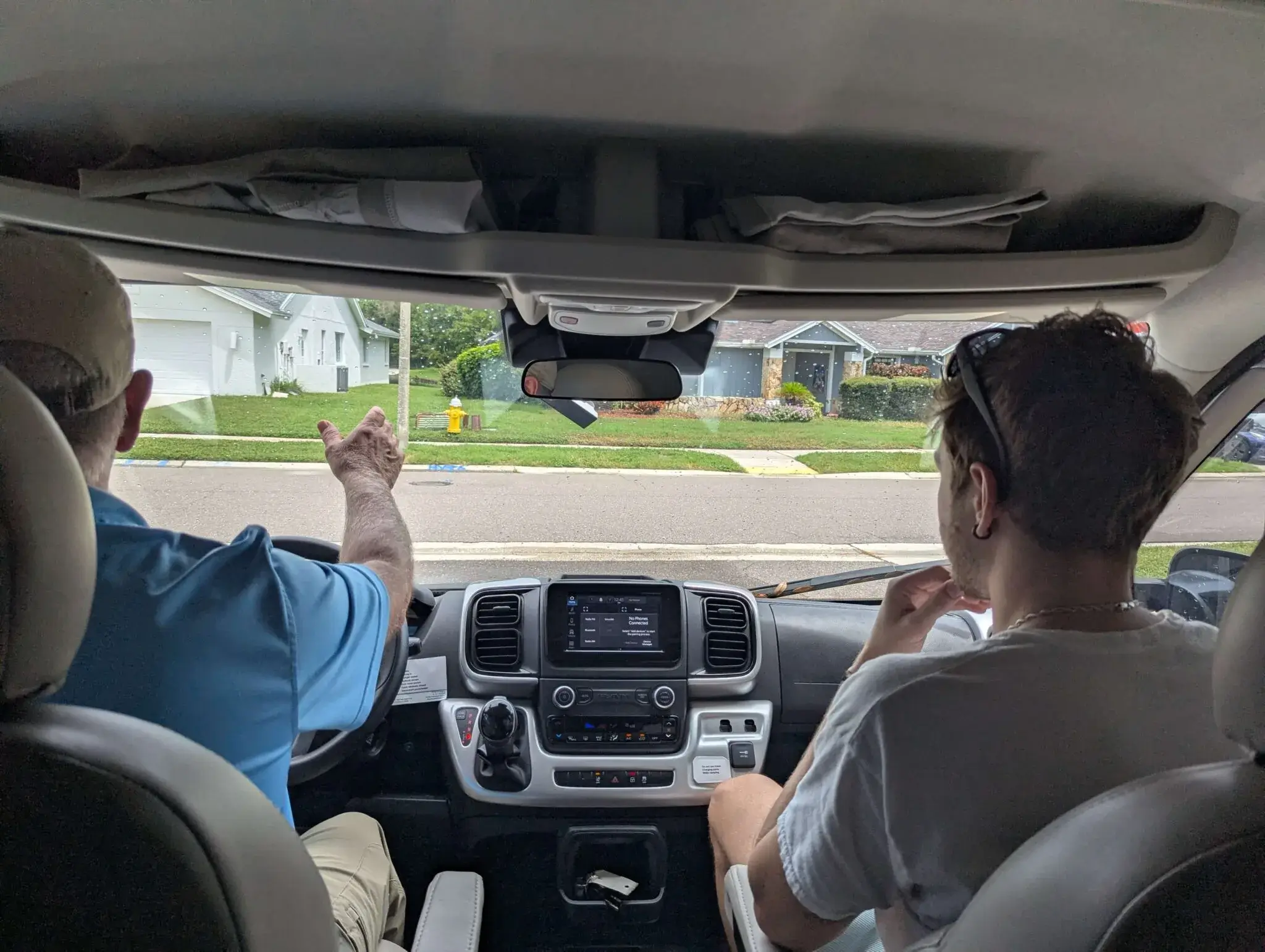
Small motorhome driver cab with steering wheel and dashboard

The Bed May Be Even More Important

For medical travel, the sleeping arrangement isn’t simply about getting a good night’s sleep.

Sometimes the passenger needs somewhere to lie down during the actual drive.

That’s a major difference between traveling in an RV and traveling in a normal passenger vehicle.

Instead of being confined to a seat for hours, the passenger may be able to rest on the bed while another family member drives.

The exact setup depends on the RV and the passenger’s circumstances, but having that flexibility is one of the primary reasons families consider an RV for long-distance medical travel.

Don’t Underestimate the Value of Air Conditioning

If you’re leaving Florida, air conditioning matters.

Florida is warm much of the year, and a person recovering from surgery or dealing with a medical issue may be particularly uncomfortable in heat.

Our RVs are equipped with systems designed to provide the comfort people expect from an RV, and depending on the specific vehicle, onboard power can come from a generator or an inverter.

This allows the RV’s systems to operate while traveling, depending on the vehicle and its equipment.

If someone needs electrical power for medical equipment, however, that’s something the family should discuss with their healthcare provider and verify against the specific RV’s electrical capabilities before the trip.

Sometimes Three People Are Better Than Two

One thing we’ve learned from these trips is that the ideal arrangement isn’t always just the patient and the driver.

If possible, three people can be a very practical arrangement for a post-surgery trip.

  • The driver can concentrate on driving.
  • The patient can concentrate on resting.
  • And the third person can help the patient, handle things inside the RV, and assist when the patient needs something.

That’s particularly helpful when the patient’s bed is toward the back of the RV.

The farther away the patient is from the driver, the more useful it can be to have another person available.

Every situation is different, of course, and some families may be perfectly comfortable traveling with two people.

What Happens While the Patient Is in the Hospital?

Renting an RV doesn’t necessarily mean the family has to live in it for the entire medical trip.

In our experience, families often stay at a hotel near the hospital while their loved one is receiving treatment.

Some may stay with the patient at the hospital.

Others may use the RV for a night or two.

And some families may choose to stay in the RV more extensively.

It’s completely up to the family and what works for their circumstances.

We’ve even had a situation where the wife was staying in a small hospital room and her husband couldn’t stay there overnight. He needed somewhere to sleep for one night, so he stayed in the RV in the parking area.

For him, the RV simply provided a comfortable place to sleep when he needed it.

That’s another advantage of having the RV available: you don’t necessarily have to use it the same way every day.

How Long Do People Rent an RV for Medical Travel?

Our medical-related rentals have generally ranged from about three nights to two weeks.

That makes sense because medical trips can be unpredictable.

A procedure might require a short trip. Another situation might involve a longer recovery period. Someone traveling to another state may need time on both ends of the appointment or surgery.

An RV rental can provide the flexibility to build the trip around the family’s schedule rather than trying to fit everything into a fixed airline itinerary.
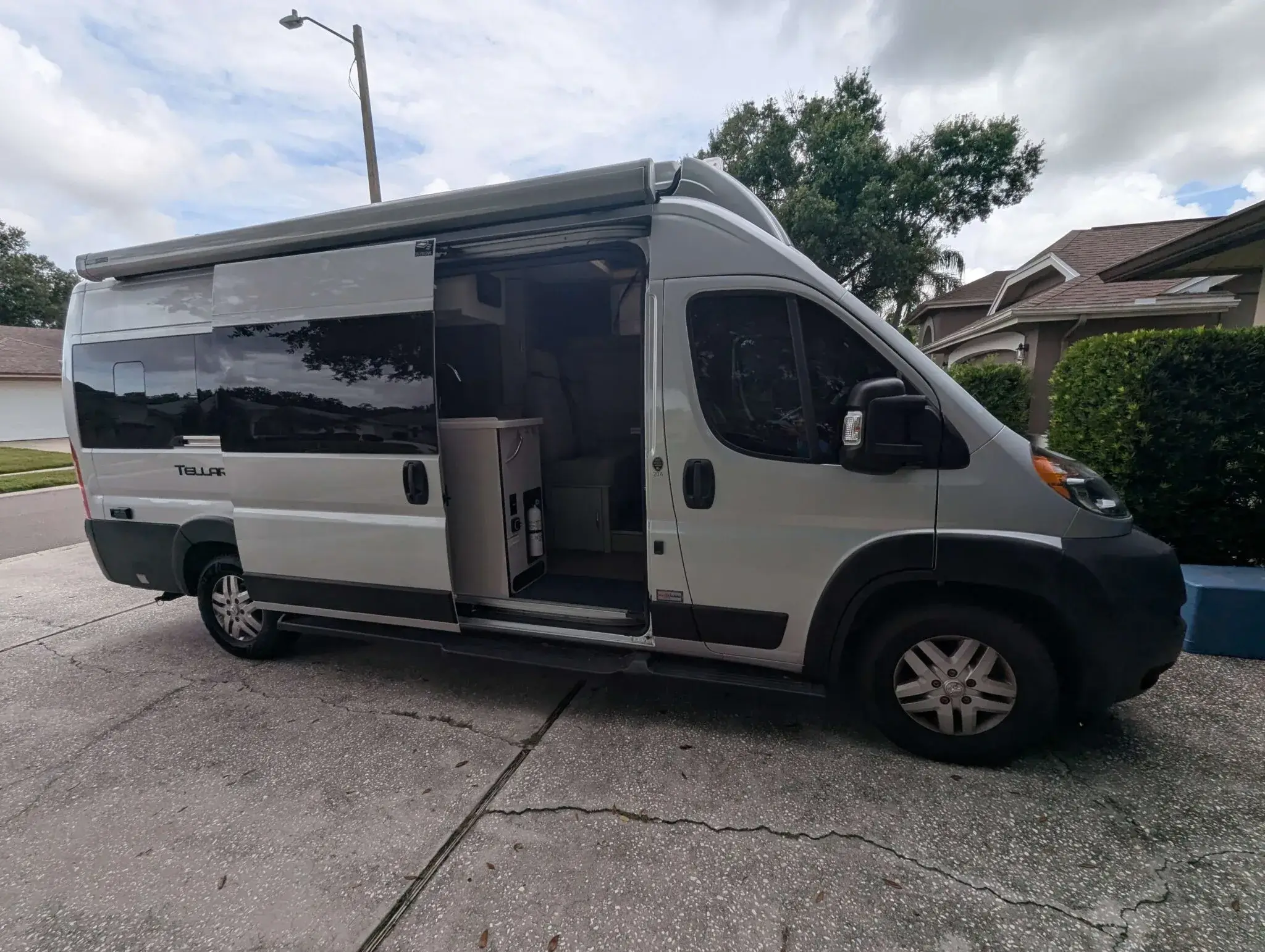
Small motorhome parked outside ready for an RV rental trip

Picking Up the RV in Palm Harbor

For customers picking up an RV from us, we don’t simply hand them the keys and send them down the road.

We walk them through the RV.

We explain how to drive it, how the systems work, and what they need to know before leaving.

For someone who hasn’t driven an RV before, that orientation is important.

The goal is for the driver to leave knowing how to operate the vehicle and understanding the basic systems before beginning a long trip.

In some circumstances, we can also arrange delivery.

For example, one of our Jacksonville customers had the RV delivered to their home before beginning their trip.

Do You Need a Special License to Drive a Small RV?

For the smaller rental RVs we’re discussing here, a special commercial driver’s license generally isn’t required.

These vehicles are designed to be driven by ordinary drivers, and the experience is much closer to driving a large van or small moving truck than driving a commercial bus.

The exact licensing requirements can depend on the particular vehicle and applicable laws, so we always recommend confirming the requirements for the specific RV you’re renting.

Is an RV Right for Your Medical Trip?

There isn’t one answer for every family.

Before renting an RV for medical travel, think about:

  • How long can the passenger comfortably sit upright?
  • Will they need to lie down during the trip?
  • Can they climb steps?
  • Would a lower bed be preferable?
  • Is bathroom access important?
  • Will someone need to help the passenger during the trip?
  • How many people will be traveling?
  • Who will drive?
  • Will you need multiple authorized drivers?
  • How far are you traveling?
  • Will you need to stay overnight along the way?
  • Does the passenger have any medical equipment requiring electrical power?
  • Does the specific RV have the appropriate electrical capability?
  • Has the patient’s healthcare provider cleared them for the trip?

The answers to those questions can help determine whether a campervan or small motorhome is the better fit.
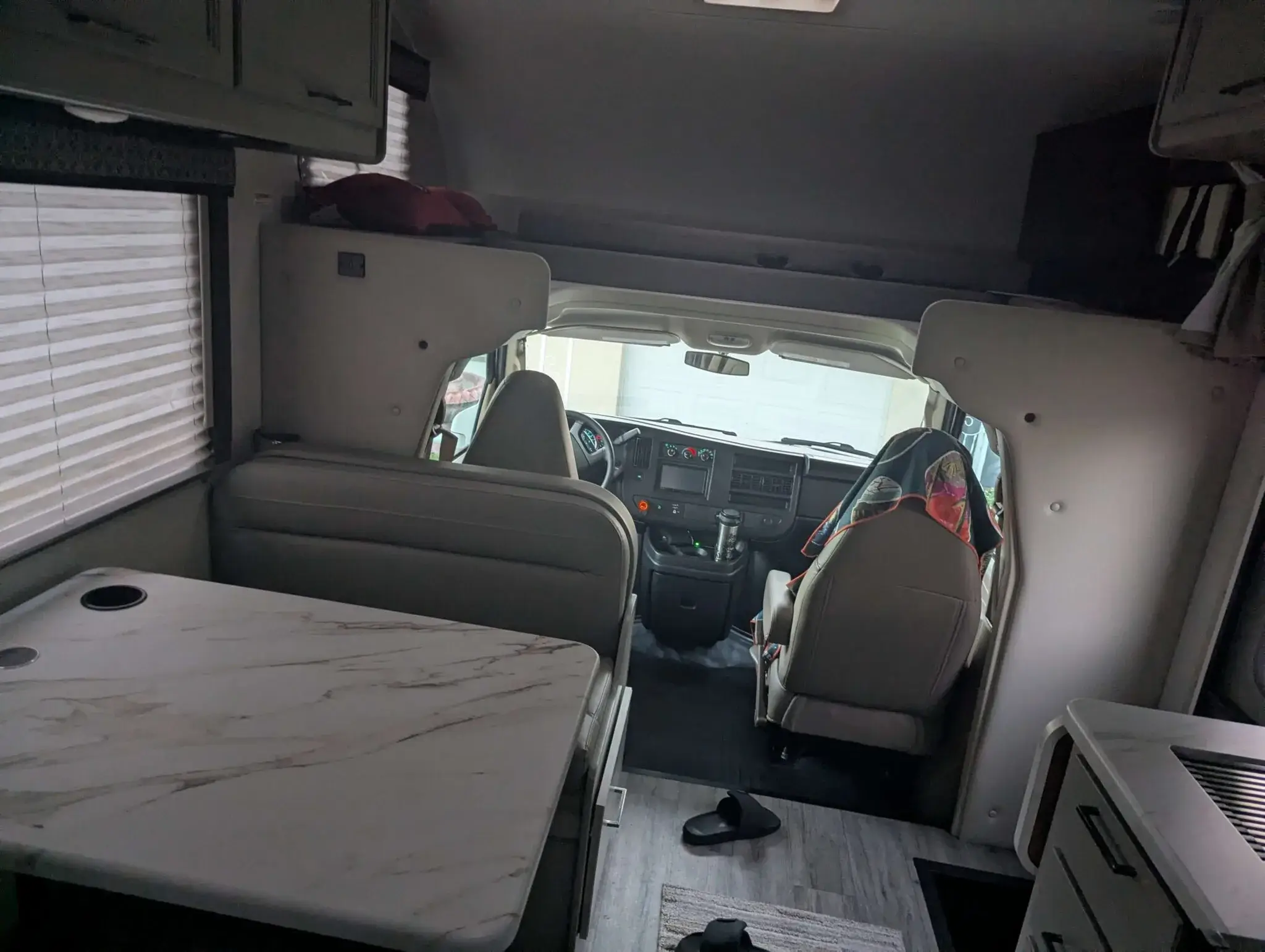
Small motorhome front seating area with dashboard and windshield

Every Medical Travel Trip Is Different

That’s probably the biggest thing we’ve learned from renting RVs for these situations.

There isn’t a standard medical trip.

One family may be taking a campervan to Jacksonville. Another may be traveling all the way to Long Island. One person may need to lie down for most of the trip. Another may simply be an older family member who doesn’t have the stamina for a long car ride or airplane flight.

One family may have two people traveling. Another may have three or more.

Some people prefer a campervan because it’s easier to drive. Others appreciate the additional space and lower sleeping arrangement of a small motorhome.

The right RV depends on the person traveling, the people helping them, and the trip you’re trying to make.

Need an RV for a Medical Trip?

If you’re considering an RV rental for surgery, medical travel, an elderly family member, or another long-distance family trip, tell us about your situation.

Let us know:

  • Where you’re going
  • How many people are traveling
  • How long you’ll be gone
  • Whether the passenger needs to lie down
  • Whether climbing steps is difficult
  • Who will be driving
  • And anything else that might affect the type of RV you need

At Palm Harbor RV Rentals, we specialize in smaller campervans and motorhomes that are easier to drive while still providing the basic comforts of an RV.

We’re based in Palm Harbor, Florida, and we’re happy to talk through the different options with you.

Sometimes the best RV isn’t the biggest one. It’s the one that fits the person who needs to make the trip.

Call 727-776-9248 or visit PalmHarborRVRentals.com to discuss your trip.
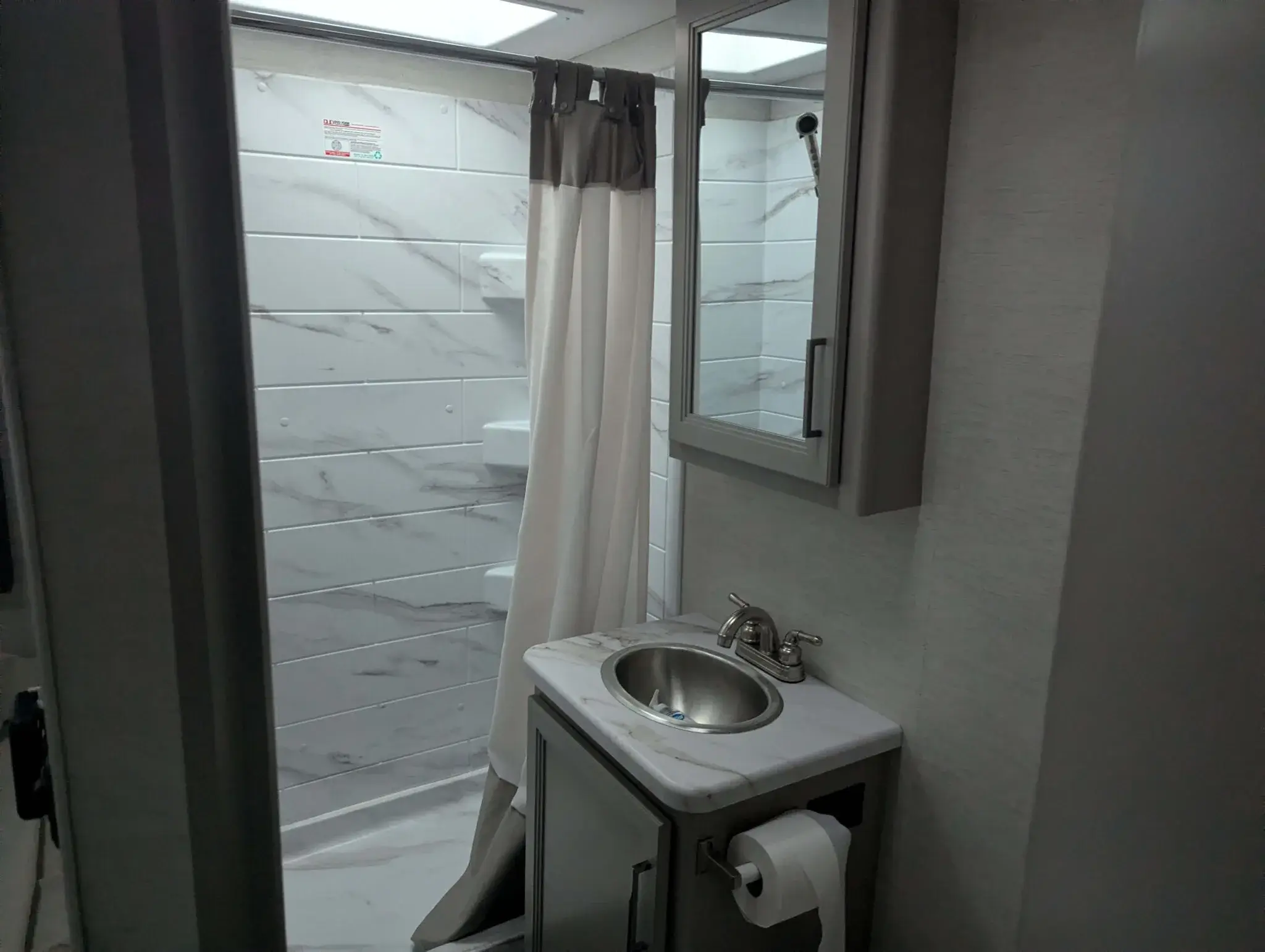
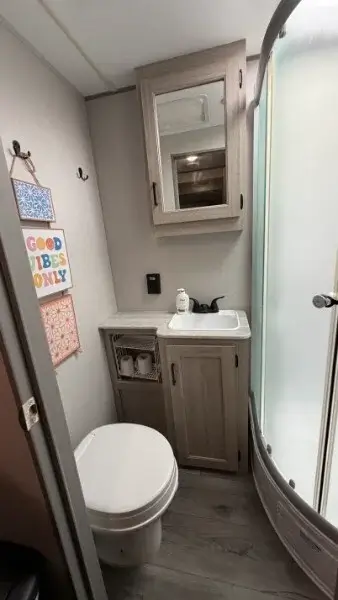
Campervan bathroom with shower, sink, toilet, and storage

Fort De Soto RV Rentals Delivered to Your Campsite – The Easiest Way to Camp in Florida

If you’ve always wanted to experience the beauty of Fort De Soto Campground without the stress of towing an RV, setting up camp, or purchasing expensive camping equipment, you’ve come to the right place.

At Palm Harbor RV Rentals, we specialize in delivering beautiful, fully equipped travel trailers directly to your reserved campsite at Fort De Soto Campground in southern Pinellas County, Florida. When you arrive, your vacation is already waiting for you.

No towing.

No backing into campsites.

No connecting utilities.

No setup.

Simply reserve your campsite, tell us your campsite number and arrival time, and we’ll take care of everything else.

Why We Love Fort De Soto Campground

Fort De Soto isn’t just another place we deliver RVs—it’s where our family has created some of our favorite memories.

We typically camp here at least twice each year, and our children have grown up exploring everything this incredible park has to offer. We’ve watched spectacular sunsets over the Gulf, enjoyed family bike rides through miles of paved trails, launched paddleboards from nearby campsites, spent afternoons fishing, and relaxed on some of Florida’s most beautiful beaches.

Those experiences inspired us to help other families experience the same unforgettable vacations without all the work that usually comes with RV camping.

Every delivery reminds us why Fort De Soto continues to be one of Florida’s premier camping destinations.

Arrive to a Fully Set Up Campsite

Most people imagine RV camping as hours of work before they can finally relax.

You have to tow the trailer, back it into the campsite, level it, connect electricity, hook up water, connect sewer, extend the awning, unpack everything, and then hope you’ve done it correctly.

We eliminate every one of those steps.

Before you arrive, our team professionally prepares your campsite.

When you pull in, you’ll find:

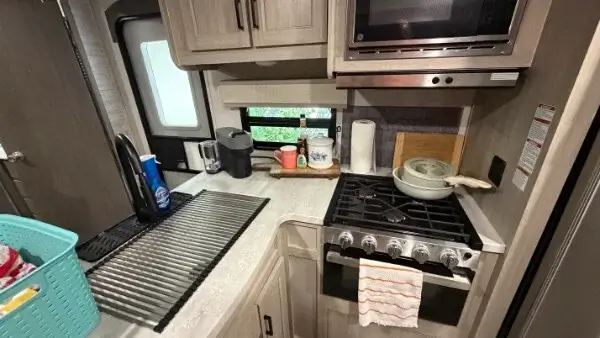
  • Your RV delivered and perfectly positioned
  • Trailer professionally leveled and stabilized
  • Water connected
  • Electric connected
  • Sewer connected
  • Air conditioning already cooling the RV
  • Fresh linens prepared
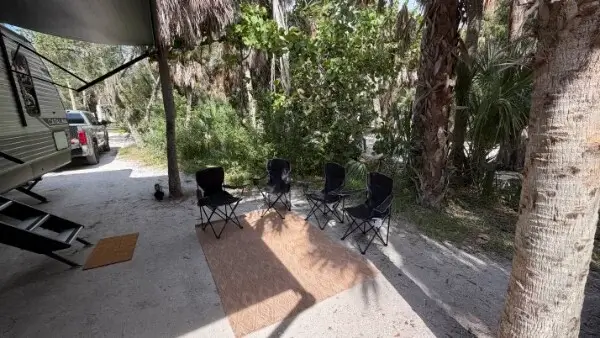
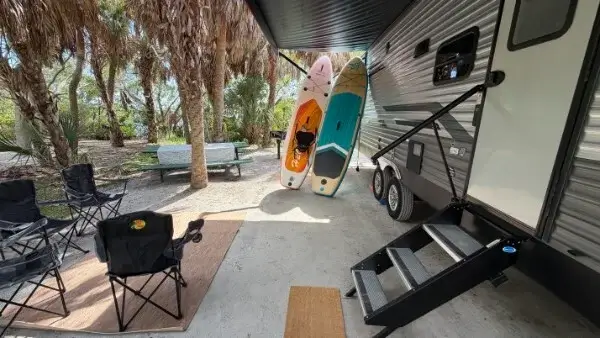
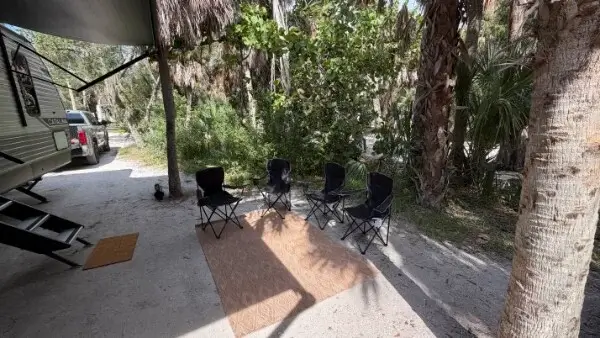
  • Outdoor seating arranged
  • Camping essentials ready
  • Personal walkthrough upon arrival

Instead of spending your first hour working, you’ll spend your first hour relaxing.

Meet Our Premier Family Bunkhouse

One of our most popular deliveries to Fort De Soto is our beautiful 2025 Premier Bunkhouse travel trailer.

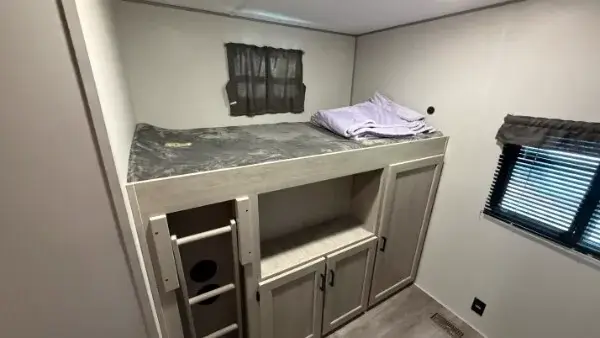
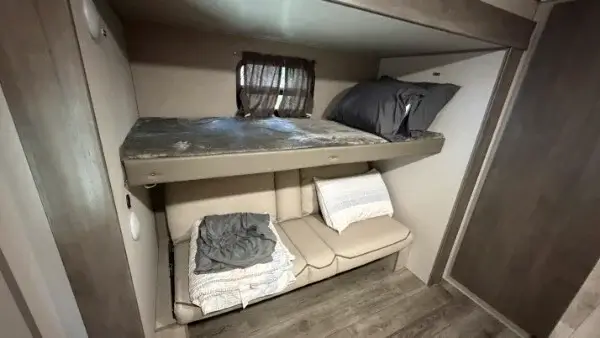
Designed with families in mind, this spacious floorplan comfortably sleeps 6 to 9 guests, making it perfect for:

  • Family vacations
  • Multi-generational trips
  • Grandparents camping with grandchildren
  • Couples traveling together
  • Groups of friends
  • First-time campers

The private bunk room is always a favorite with kids, providing plenty of sleeping space while giving parents additional privacy in the master bedroom.

One of our favorite features is the spacious outdoor camp kitchen complete with:

  • Large griddle
  • Outdoor refrigerator
  • Sink
  • Storage cabinets
  • Drawers for cooking supplies

Whether you’re cooking breakfast before heading to North Beach or making dinner after a day of paddleboarding, the outdoor kitchen quickly becomes everyone’s favorite gathering spot.

We Include More Than Just an RV

We believe camping should feel like a vacation—not another project.

Depending on availability, we often include extras that help make your stay even more enjoyable.

For many of our Fort De Soto deliveries, you’ll find:

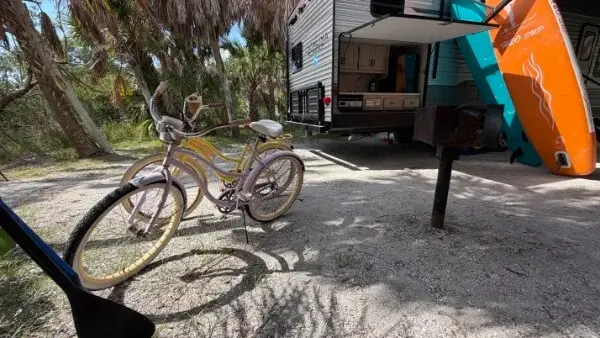
  • Paddleboards
  • Bicycles
  • Camping chairs
  • Outdoor living setup
  • Snacks waiting inside
  • Fresh linens
  • Kitchen essentials

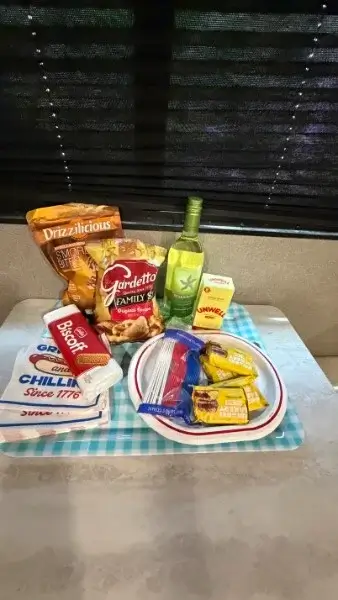
Many of today’s photos show one of our recent deliveries complete with paddleboards, bikes, chairs, snacks, and a fully prepared campsite waiting for our guests to arrive.

It’s these little details that make the experience feel special.

Personalized Local Service Makes the Difference

We’re not a nationwide rental company.

We’re a local, family-owned business that genuinely enjoys helping people discover one of our favorite places in Florida.

Because we’ve camped here ourselves, we understand what guests appreciate most.

When you arrive, we don’t simply hand you the keys.

We’ll personally meet you at your campsite, introduce you to the RV, explain how everything works, answer your questions, and make sure you’re comfortable before leaving.

If you need assistance during your stay, we’re just a phone call away.

That personalized service is something our guests consistently appreciate.

Why Families Love Camping at Fort De Soto

Fort De Soto Campground has earned its reputation as one of Florida’s best campgrounds for good reason.

Nearly every campsite offers easy access to the water, making it simple to enjoy activities like:

  • Paddleboarding
  • Kayaking
  • Fishing
  • Swimming
  • Beachcombing
  • Bird watching
  • Bike riding
  • Nature walks
  • Watching dolphins
  • Relaxing by the water

Because the park covers such a large area, it rarely feels overcrowded even during busy camping seasons.

Whether you’re planning a long weekend or a week-long vacation, there’s always something new to explore.

Perfect for First-Time Campers

Many of our guests have never camped in an RV before.

They’re often surprised by how easy we make the entire experience.

You don’t need:

  • A truck capable of towing
  • RV driving experience
  • Knowledge of campground hookups
  • Expensive camping gear
  • RV maintenance skills
  • Storage space at home

You simply reserve your campsite, pack your clothes, bring your food, and arrive ready to enjoy your vacation.

We’ll handle the rest.

Bring the Whole Family

Our delivered RV rentals are perfect for almost every type of traveler.

We regularly host:

  • Families with children
  • Couples
  • Grandparents
  • Retirees
  • Snowbirds
  • Military families
  • International visitors
  • First-time campers
  • Experienced RV enthusiasts looking for an easier vacation

Our trailers comfortably sleep larger families, and kids especially enjoy having their own bunk room.

Dogs are welcome at Fort De Soto Campground, making it easy to include your four-legged family members on your adventure.

Frequently Asked Questions

Do I need to tow the RV?

No. We deliver the RV directly to your reserved campsite and complete the entire setup before you arrive.

Do I reserve the campsite?

Yes. Guests reserve their campsite directly through Fort De Soto Campground. Once you’ve secured your reservation, simply provide us with your campsite number and arrival time.

Will everything already be connected?

Yes. Water, electric, sewer, leveling, stabilization, and air conditioning are all completed before you arrive.

Do you provide linens?

Yes. Fresh linens are included with your rental.

How many people can sleep in the trailer?

Our Premier Bunkhouse comfortably sleeps approximately 6 to 9 guests, making it ideal for families.

Are bikes and paddleboards included?

When available, we love including bikes and paddleboards to help guests enjoy everything Fort De Soto has to offer.

What happens if it rains?

Relax inside your air-conditioned RV, cook a great meal, watch a movie, play games with the family, or simply enjoy the peaceful sound of rain while staying comfortable indoors.

Create Memories That Last a Lifetime

Some of our family’s favorite memories have been made at Fort De Soto.

Watching the sunset after a day on the water.

Cooking breakfast outside while everyone slowly wakes up.

Kids riding bikes through the campground.

Launching paddleboards just steps from the campsite.

Evening walks along the waterfront.

These are the moments that turn an ordinary vacation into lifelong memories.

Our goal is simple—to remove the work so you can focus on enjoying those moments with the people you love.

Reserve Your Delivered RV at Fort De Soto

If you’re looking for the easiest way to experience one of Florida’s most beautiful waterfront campgrounds, Palm Harbor RV Rentals is ready to help.

Simply reserve your campsite at Fort De Soto Campground, check availability and book, choose one of our beautiful travel trailers, and let us do the heavy lifting.

We’ll deliver your RV, set everything up before you arrive, greet you personally at your campsite, and help you start your vacation the moment you pull in.

That’s camping the easy way.

We look forward to welcoming you to Fort De Soto and helping you create memories your family will treasure for years to come.

Supporting Those Who Serve: RV Rentals for Military Personnel and Their Families

At Palm Harbor RV Rentals, we believe that the men and women who serve our country deserve comfortable, clean, and flexible housing options while traveling, training, or relocating. That’s why we proudly offer a 5% military discount to active-duty military personnel, veterans, reservists, National Guard members, retired military members, and their families.

While many people think of RV rentals as a way to take a vacation, they can also provide a practical housing solution for military personnel who are away from home for training assignments, temporary duty stations, or relocation needs.

A Better Living Environment While Serving

Military personnel often spend weeks or months away from home while attending training exercises, supporting new recruits, or completing temporary assignments. During these periods, housing options can vary greatly.

For some service members, living in barracks is perfectly acceptable. However, others may prefer a cleaner, quieter, and more private environment that allows them to focus on their work, maintain their routines, and enjoy a higher quality of life during their assignment.

Our newer, well-maintained campervans and small drivable RVs provide a comfortable alternative. Service members can prepare their own meals, store familiar food items, maintain a cleaner living space, and enjoy personal privacy that may not always be available in shared housing environments.

For those with allergies, asthma, or other respiratory sensitivities, having control over their living environment can make a significant difference in their day-to-day comfort and overall well-being.

Flexibility for Military Travel

Military assignments often require flexibility. Personnel may need to travel between bases, training facilities, temporary housing locations, or military communities. A drivable campervan allows service members to bring their housing with them.

Instead of repeatedly checking into different lodging facilities, a campervan provides a consistent living and working environment wherever duty calls. Many military professionals appreciate having their own workspace, kitchen, sleeping area, and storage available throughout their assignment.

This flexibility can be especially valuable for senior enlisted personnel, officers, instructors, contractors supporting military operations, and reservists serving temporary assignments away from home.

Real-World Military Support

One of our customers was a local Army Reserve member who was assigned to provide training for new recruits at Fort Stewart, Georgia. Having access to a comfortable RV gave him flexibility during his assignment while allowing him to maintain many of the comforts of home.

Experiences like these have shown us that RV rentals can be much more than vacation vehicles. They can serve as temporary housing solutions that support the people who support our nation.

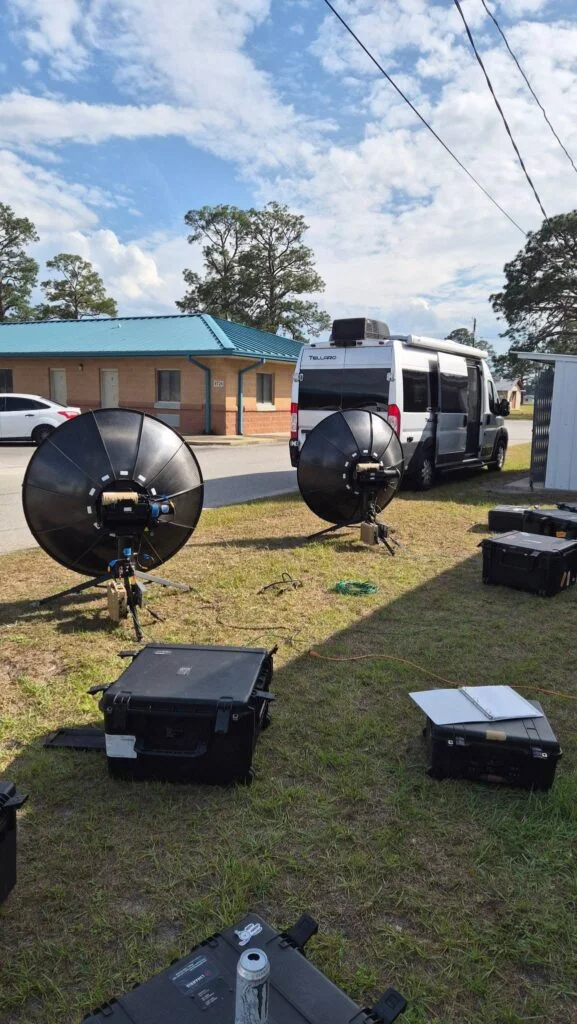
Campervan parked outdoors with equipment cases and filming equipment nearby

Perfect for Military Families

Military families face unique challenges when traveling, relocating, or visiting loved ones stationed in Florida. Our campervans and RVs can be used for:

  • Family vacations and reunions
  • Temporary housing during relocations
  • PCS transition periods
  • Extended visits with family members stationed in Florida
  • Training assignments and temporary duty travel
  • Housing while searching for permanent accommodations

By traveling in an RV, families can maintain familiar routines, prepare meals together, and avoid the expense of extended hotel stays.

What’s Included

We strive to make travel as easy as possible by providing many of the essentials needed for a comfortable stay. Depending on the rental, guests may have access to:

  • Kitchen supplies and cookware
  • Comfortable sleeping accommodations
  • Linens and bedding
  • Camping chairs and outdoor equipment
  • Modern amenities and conveniences
  • Clean, professionally maintained vehicles

Our goal is to provide a turnkey experience so military personnel and their families can focus on their mission, their travel, or their time together.

Local Service with Personal Attention

Unlike many national RV rental companies, Palm Harbor RV Rentals focuses on serving the western Tampa Bay region with personalized service and a carefully maintained fleet of newer campervans and RVs.

We take pride in offering reliable vehicles, responsive customer support, and a level of personal attention that larger companies often cannot match.

Thank You for Your Service

We are honored to support the military community through affordable, flexible, and comfortable RV rental solutions. Whether you are reporting for training, visiting family, relocating, or simply looking for a better quality of life during a temporary assignment, Palm Harbor RV for medical travel is here to help.

As a small business, we appreciate the sacrifices made by our military personnel and their families. Offering a 5% military discount is one small way we can say thank you for your service to our country.

What Is an RV Rental?

An RV (Recreational Vehicle) is a self-contained motorhome or camper that combines transportation and lodging into one. When you rent an RV, you get a fully equipped home on wheels — complete with a kitchen, bathroom, sleeping areas, and living space.

 Top 10 Benefits of Renting an RV

1. Save Money on Hotels
A weeklong RV trip can cost significantly less than hotel stays, especially for families or groups. No nightly room rates, no resort fees, no surprise charges.

2. Cook Your Own Meals
With a full kitchen onboard, you can prepare breakfast, lunch, and dinner. Save money by hitting grocery stores instead of restaurants — plus, kids can help with cooking!

3. Bring the Comforts of Home
Your own bed. Your own bathroom. Your own TV. No unpacking suitcases at each stop. Everything travels with you.

4. Ultimate Flexibility
Change plans on the fly. Skip the crowded hotel and chase better weather. Stay an extra night at a spot you love — no reservations to worry about.

5. Closer to Nature
Sleep surrounded by trees or wake up to ocean views. Campgrounds put you outdoors in a way hotels never can.

6. No Packing & Repacking
Load once. Unload once. Your clothes, gear, and snacks stay in the RV. Perfect for families with kids.

7. Pet-Friendly Travel
Most hotels restrict pets. With an RV, your furry family members come along — no kennels or pet sitters needed.

8. Bond with Family
Road trips create lasting memories. Games, songs, and conversations in the RV bring families closer together.

9. Eco-Friendly Option
Modern RVs are more fuel-efficient than ever. One vehicle for the whole family beats multiple cars.

10. Unique Experiences
Watch sunrise from your bed. Fall asleep to ocean waves. Park at national parks minutes from the entrance.

Short Term Housing in Palm Harbor & Dunedin

Need a comfortable place to stay for a few weeks? Traditional short-term housing options can be expensive, limited, or lack the flexibility you need. At Palm Harbor RV Rentals, we offer a unique and affordable alternative for temporary living situations with our beautiful RV rentals placed in gorgeous local RV parks near the Palm Harbor and Dunedin area.

Whether you need housing for one week, six weeks, or anything in between, our RV accommodations provide a clean, comfortable, and convenient solution.

A Better Option for Temporary Housing

If you are relocating, waiting on home repairs, between homes, traveling for work, or simply need a short-term place to stay, our RV rentals can be an ideal fit.

Instead of a cramped hotel room or expensive vacation rental, enjoy:

  • Spacious living areas
  • Private bedroom options
  • Full kitchens
  • Bathrooms with shower
  • Air conditioning
  • Wi-Fi ready setups
  • Outdoor seating areas
  • Peaceful resort-style RV park settings

Our units are designed to feel like home while giving you the freedom and flexibility of temporary housing.

Beautiful RV Parks Near Palm Harbor & Dunedin

We can help place you in well-maintained, scenic RV parks close to everything you need. Enjoy staying near:

  • Beaches and waterfront parks
  • Grocery stores and shopping
  • Restaurants and entertainment
  • Downtown Dunedin
  • Clearwater beaches
  • Tarpon Springs attractions
  • Local hospitals and business centers

You get the comfort of a private living space combined with the beauty of Florida outdoor living.

Perfect for Many Situations

Our short-term housing solutions are popular for:

  • Home renovations
  • Insurance claim displacement
  • Relocation to Florida
  • Traveling nurses and contractors
  • Family visiting the area
  • Seasonal stays
  • Temporary work assignments
  • Transition between homes

Flexible 1 to 6 Week Stays

We specialize in stays between 1 and 6 weeks, making it easy when you need something more than a hotel but less than a long lease.

We can often assist quickly and help match you with the right RV and location based on your needs.

Planning an RV Trip for Medical Treatment?

If you need to travel for treatment, recovery, or ongoing medical appointments, an RV can provide a more comfortable and flexible way to manage a longer trip. Having a place to rest, access basic amenities, and avoid spending hours in a car can make travel easier for some patients and their families. If you’re planning this type of trip, see RVs for medical travel for more information about what to consider when choosing an RV.

Why Choose Palm Harbor RV Rentals?

We are a local, family-run business focused on helping people find enjoyable and practical temporary housing solutions. We pride ourselves on clean RVs, responsive service, and helping guests feel comfortable during transitional times.

Need Short Term Housing?

If you need temporary housing near Palm Harbor or Dunedin, let us help. We can provide one of our beautiful RVs in a gorgeous local RV park for a comfortable stay between 1 and 6 weeks.


Contact Palm Harbor RV Rentals today to check availability and pricing.

Road Trip Ideas from Palm Harbor

Florida is a camper’s paradise, and Palm Harbor puts you within driving distance of some incredible destinations. Whether you’re chasing spring breakers, seeking solitude in nature, or want crystal-clear springs, there’s a spot for you.

5 Unforgettable Road Trips Starting from Palm Harbor

Pick up your RV rental in Palm Harbor and explore these epic routes:

1. The Gulf Coast Escape (3-5 days)

Route: Palm Harbor → Clearwater Beach → Sarasota → Naples → Everglades

Follow the Gulf Coast south — hit Clearwater’s beaches, explore Sarasota’s arts scene, then head to Naples for upscale dining. End in the Everglades for airboats and wildlife.

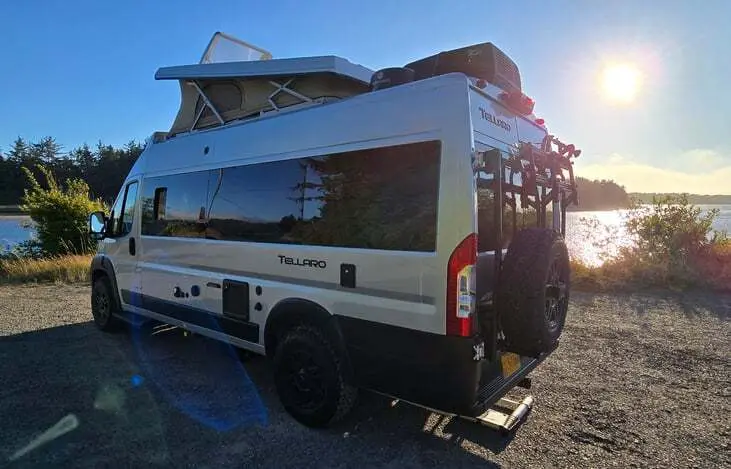
Telaro campervan parked beside a lake with raised roof and rear bike rack

Day 1: Palm Harbor to Clearwater (45 min)

Start your journey at Clearwater Beach — consistently ranked among America’s best beaches. Arrive early to beat the crowds and snag parking at Pier 60. Walk the famous Clearwater Marina and grab breakfast at Frenchy’s Sandbar (try the grouper sandwich). Afternoon: rent jet skis or book a dolphin-watching cruise. Evening: catch the sunset from the pier and grab dinner at Columbia Restaurant for authentic Spanish-Cuban fare.

Day 2: Clearwater to Sarasota (1 hr)

Head south to St. Petersburg — stop at the Dali Museum if you love surrealism, or explore the Sunken Gardens. Continue to Siesta Key Beach, famous for its quartz-crystal sand. Spend the afternoon at Siesta Public Beach or rent kayaks at Siesta Key Watersports. Dinner in Siesta Key Village at The Overton or grab seafood to-go.

Day 3: Sarasota to Naples (2.5 hrs)

Drive to Naples, the upscale gem of Southwest Florida. Stroll Fifth Avenue South for shopping and dining. Visit Naples Pier for sunset. Need beach time? Head to Delnor-Wiggins Pass State Park or Vanderbilt Beach. Dinner at The Turtle Club — beachfront dining with fresh seafood.

Day 4-5: Naples to Everglades (1.5 hrs)

Head to the Everglades via Ochopee. Stop at Fakahatchee Strand for ghost orchid spotting (best in spring). In Everglades City, book an airboat tour at Wooten’s or Jungle Erv. Spot alligators, manatees, and roseate spoonbills. Kayak through mangrove tunnels at Ten Thousand Islands. Camp at Collier-Seminole State Park or return to Palm Harbor.

Pro Tips:

  • Book beach parking in advance via the ParkSmart app
  • Bring sea sickness meds for boat tours
  • Download offline maps — cell service is spotty in the Everglades

2. Florida Keys Adventure (5-7 days)

Route: Palm Harbor → Key West → Marathon → Islamorada → Key Largo

The ultimate tropical road trip. Key West’s nightlife, Marathon’s turtle hospital, Islamorada’s fishing charters, and Key Largo’s snorkeling. Don’t miss Bahia Honda State Park!

Day 1: Palm Harbor to Key West (6 hrs)

This is a long drive — break it up in Key West or stop in Islamorada. Once in Key West, explore Duval Street, grab conch fritters at Emerald Land, and watch sunset at Mallory Square. Nightlife: Sloppy Joe’s or Green Parrot.

Day 2: Key West

Visit Ernest Hemingway Home & Museum (meet the six-toed cats). Explore Fort Zachary Taylor State Park for the best beach in Key West. Snorkel or dive at Hawaii or Sand Key reefs. Kayak through Salt Marsh at dusk for a magical eco-tour. Dinner at Latitudes on Sunset Key — book ahead!

Day 3: Key West to Marathon (1.5 hrs)

Stop at Bahia Honda State Park — the most photogenic beach in the Keys. Continue to Marathon and visit the Turtle Hospital (rescue and rehab injured sea turtles). Sunset at Sombrero Beach.

Day 1: Palm Harbor to Crystal River (1.5 hrs)

Arrive early at Crystal River — the Manatee Capital of the World. Book a guided manatee swim with Crystal River Watersports or Manatee Tour (wetsuit provided). The water is 72°F year-round — brrr, but worth it! Afternoon: explore Crystal River Archaeological State Park, a pre-Columbian mound site. Dinner at The Crab Plant for fresh seafood.

Day 2: Crystal River to Homosassa (30 min)

Visit Homosassa Springs Wildlife State Park — see manatees, hippos (yes, hippos!), and native Florida wildlife. Book an airboat tour through Homosassa River with Swamp Fever Airboat Adventures. Afternoon paddle: rent a kayak or SUP at Rogers Park. Camp at Homosassa River RV Resort or stay at Old Pine Log Bed & Breakfast.

Day 3: Homosassa to St. George Island (2.5 hrs)

Drive to Apalachicola and catch the St. George Island ferry (first come, first served, or reserve). This is one of America’s most beautiful barrier islands — white sand, emerald water, and zero crowds. Beachcomb at St. George Island State Park (9 miles of beach!). Sunset at the Apalachicola Bay. Fresh oysters at The Fisherman’s Wife or Apalachicola Seafood Grill.

Day 4: Return

Morning beach walk, then ferry back. Stop in Apalachicola — explore the historic downtown and grab oysters. Head back to Palm Harbor.

Pro Tips:

  • Manatee season is November-March (peak December-February)
  • Bring water shoes for manatee swims — rocky bottom
  • Ferry runs every 30 minutes; arrive early on weekends

Day 4: Marathon to Islamorada (45 min)

Islamorada is the “Sportfishing Capital of the World.” Charter a fishing trip or try reef fishing. Afternoon at Anne’s Beach — shallow, calm waters perfect for wading. Evening: happy hour at Morada Bay or Pierre’s for sunset views.

Day 5: Islamorada to Key Largo (30 min)

Snorkel or dive at John Pennekamp Coral Reef State Park — America’s first underwater state park. Kayak at Dagny Johnson Key Largo Hammock Botanical State Park. Visit the African Queen boat (yes, the movie one!). End with dinner at Snook’s Bayside.

Day 6-7: Return

Drive back via the Overseas Highway — pull off at scenic overlooks. Stop in Key West for any missed attractions, or take the ferry from Key West back to Fort Myers if you want to avoid the drive.

Pro Tips:

  • Book diving/snorkeling in advance
  • Mosquitoes are brutal — bring DEET at dusk
  • Fill gas before leaving the mainland — Keys gas is expensive

3. The Nature Coast (3-4 days)

Route: Palm Harbor → Crystal River → Homosassa → St. George Island

Swim with manatees in Crystal River, explore Homosassa Springs, then ferry to unspoiled St. George Island. Best from November-March when manatees gather.

Route: Palm Harbor → Crystal River → Homosassa → St. George Island

Day 1: Palm Harbor to Crystal River (1.5 hrs)Arrive early at Crystal River — the Manatee Capital of the World. Book a guided manatee swim with Crystal River Watersports or Manatee Tour (wetsuit provided). The water is 72°F year-round — brrr, but worth it! Afternoon: explore Crystal River Archaeological State Park, a pre-Columbian mound site. Dinner at The Crab Plant for fresh seafood.

Day 2: Crystal River to Homosassa (30 min)Visit Homosassa Springs Wildlife State Park — see manatees, hippos (yes, hippos!), and native Florida wildlife. Book an airboat tour through Homosassa River with Swamp Fever Airboat Adventures. Afternoon paddle: rent a kayak or SUP at Rogers Park. Camp at Homosassa River RV Resort or stay at Old Pine Log Bed & Breakfast.

Day 3: Homosassa to St. George Island (2.5 hrs)Drive to Apalachicola and catch the St. George Island ferry (first come, first served, or reserve). This is one of America’s most beautiful barrier islands — white sand, emerald water, and zero crowds. Beachcomb at St. George Island State Park (9 miles of beach!). Sunset at the Apalachicola Bay. Fresh oysters at The Fisherman’s Wife or Apalachicola Seafood Grill.

Day 4: ReturnMorning beach walk, then ferry back. Stop in Apalachicola — explore the historic downtown and grab oysters. Head back to Palm Harbor.

Pro Tips: Manatee season is November-March (peak December-February)Bring water shoes for manatee swims — rocky bottomFerry runs every 30 minutes; arrive early on weekends

4. Central Florida Explorer (3-5 days)

Route: Palm Harbor → Orlando → Kissimmee → Daytona Beach

Theme parks, or skip them for Orlando’s other offerings: airboat rides, gem mining, and dinosaur-themed attractions. Wrap up with Daytona Beach’s hard-packed sands.

Day 1: Palm Harbor to Orlando (2 hrs)

Skip the theme parks and discover Orlando’s hidden gems:

  • Wekiwa Springs State Park — kayak the Wekiwa River, spot manatees and otters
  • Walt Disney World — if you go, book Genie+ and arrive early
  • Dr. Phillips Center for the Performing Arts — world-class shows
  • Universal Studios — Islands of Adventure for thrill rides
  • Orlando Museum of Art — underappreciated cultural gem
  • Universal CityWalk — dining and entertainment without park admission

Dinner in Milk District (creative eats) or Ivanhoe Village (old school Orlando vibes).

Day 2: Orlando Area

Choose your adventure:

  • Airboat tours in Kissimmee — Boggy Creek Airboat Adventures
  • Crayola Experience — hands-on fun for families
  • Kennedy Space Center — 1 hr drive, full day needed
  • Gatorland — old-school Florida attraction, cheap and fun
  • Orlando Balloon Tours — sunrise hot air balloon ride

Evening: explore Disney Springs for free live entertainment and dining.

Day 3: Orlando to Daytona Beach (1.5 hrs)

Drive to Daytona Beach — hard-packed sand you can drive on (March-October). Activities:

  • Daytona International Speedway — tour or race day
  • Ponce Inlet Lighthouse — climb 203 steps for epic views
  • Marine Science Center — sea turtle rehab
  • Daytona Beach Boardwalk — classic beachfront fun

Dinner at The Cellar (upscale) or Boot Hill Saloon (local dive).

Day 4-5: Extended Options

  • Add St. Augustine (1 hr north) — America’s oldest city
  • Add Ocala (1 hr west) — horse country, springs, and hiking
  • Add Kennedy Space Center if not done yet

Pro Tips:

  • Avoid I-4 during rush hour (4-7 pm)
  • Summer thunderstorms are daily — plan indoor activities for afternoons
  • Kennedy Space Center sells out — book online

5. The Panhandle Run (7+ days)

Route: Palm Harbor → Tallahassee → Destin → Panama City → Pensacola

Florida’s often-overlooked north. Apalachicola National Forest, Tallahassee’s history, Destin’s emerald waters, and Pensacola’s Gulf Breeze. Best in spring or fall to avoid crowds.

Day 1: Palm Harbor to Tallahassee (4 hrs)

Drive north to Florida’s capital. Explore:

  • Florida State Capitol — free observation deck
  • Museum of Florida History — excellent fossil and replica exhibits
  • Knott House Museum — historic 1840s home
  • St. Marks National Wildlife Refuge — hiking and birding

Dinner at The Food Shop (locals-only) or Masa for Spanish tapas.

Day 2: Tallahassee Area

  • Wakulla Springs State Park — swim in 72°F springs, take a river boat tour
  • St. George Island (detour) — if you didn’t do the Nature Coast trip
  • Apalachicola National Forest — remote hiking and wildlife
  • Dollar-dollar tests, gold courses — no, wait, that’s wrong

Actually: Dorothy B. Oven Park — beautiful gardens, free

Drive to Apalachicola for oysters, then continue to St. George Island for sunset.

Day 3: Tallahassee to Destin (3 hrs via Apalachicola)

Arrive in Destin — the “World’s Luckiest Fishing Village.” Activities:

  • Destin Harbor — watch the charter boats return
  • Big Kahuna’s Water & Adventure Park — fun for families
  • Destin Commons — shopping and dining
  • Snorkel the Bay — clear water, good for beginners

Dinner at The Crab Trap or Jackacuda’s for fresh catch.

Day 4: Destin Area

  • Gulfarium Marine Adventure Park — dolphins and sea lions
  • Henderson Beach State Park — sugar white sand
  • Boat tours — deep sea fishing or sunset dolphin cruise
  • Emerald Coast — explore nearby Sandestin resort area

Day 5: Destin to Panama City Beach (45 min)

Visit St. Andrews State Park — consistently ranked among top beaches. Try:

  • Gulf World Marine Park — marine animal encounters
  • Shipwreck Island Waterpark — thrills
  • Pier Park — shopping and dining

Dinner at Firefly (incredible fusion) or Schooners (local legend, toes in the sand).

Day 6: Panama City to Pensacola (1.5 hrs)

Florida’s westernmost city has:

  • Pensacola Beach — another top beach
  • Fort Pickens — historic Civil War fort
  • Pensacola Lighthouse — climb 177 steps
  • National Naval Aviation Museum — free, world-class
  • Historic Downtown — galleries, breweries, and Southern food

Dinner at Jackson’s Steakhouse (best in town) or The Oar House.

Day 7: Return

Drive back to Palm Harbor (5-6 hrs) or extend:

  • Add Mobile, Alabama (2 hrs) — historic district, amazing seafood
  • Add New Orleans (5 hrs) — well, that’s a whole other trip!

Pro Tips:

  • Panhandle beaches are crowded Memorial Day-Labor Day
  • Fall is perfect — fewer crowds, mild weather, lower prices
  • Hurricane season is June-November — check weather
  • Fill gas in Tallahassee — prices drop going west

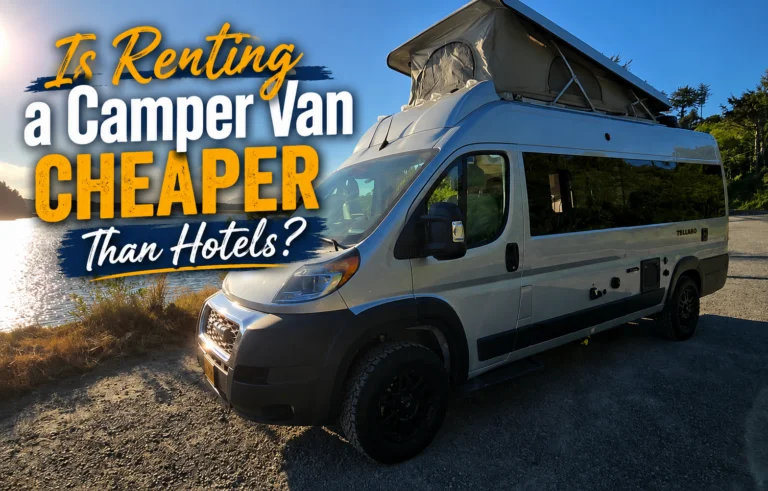
Is Renting a Camper Van Cheaper Than Hotels?

The short answer is: it depends on the trip — but the real answer goes far beyond price.

Most people compare camper van rental costs directly to hotel nightly rates. That’s where the misunderstanding starts. If you only look at price on paper, you miss how travel actually works in real life: time, flexibility, convenience, and experience all matter just as much as dollars.

Based on my experience running Palm Harbor RV Rentals, here’s a more honest breakdown of when camper vans can save you money — and when they might not — plus what most travelers completely overlook.

Telaro campervan parked beside a lake with raised pop-top roof

The Biggest Mistake People Make When Comparing Costs

The most common mistake is simple:

People compare hotel nightly rates vs RV rental nightly rates.

But that ignores everything else:

  • Check-in and check-out schedules
  • Packing and unpacking multiple times
  • Driving back and forth to a fixed location
  • Dining out for every meal
  • Parking fees and resort fees
  • Time lost in transitions

A camper van changes that entire equation. You’re not “booking a room.” You’re carrying your room with you.

When Camper Vans Can Actually Be Cheaper

Yes — camper vans can absolutely cost less, but usually in specific travel styles:

1. Flexible, Moving Trips

If you’re stopping in multiple places instead of staying in one hotel the entire time, the savings add up fast.

Hotels multiply costs every time you move locations. A camper van doesn’t.

2. Boondocking & Low-Cost Stays

There are plenty of low-cost or even free places to stay, such as:

  • Certain public lands and dispersed camping areas
  • City and county parks
  • Budget-friendly RV sites
  • Off-grid boondocking opportunities

That flexibility removes one of the biggest travel expenses entirely: lodging.

3. Group and Family Travel

Families often overlook this one.

With a camper van:

  • You’re not booking multiple hotel rooms
  • Kids can sleep while you move early
  • You don’t lose time packing everyone up each morning
  • Meals can be prepared onboard instead of eating out constantly

That combination often reduces both cost and stress.

When Hotels Still Make More Sense

Hotels still win in certain situations — and that’s important to be honest about.

1. Long-Distance “Fly-In” Trips

If you’re flying across the country and staying in one city, hotels are usually simpler and more practical.

2. Tight Parking or Urban Destinations

Some destinations simply aren’t RV-friendly. Limited parking or strict city layouts can make hotels the better choice.

3. Short, High-Intensity Stays

If your trip is packed with events and you’re barely at your room, a hotel is often more efficient.

The Hidden Advantage Hotels Don’t Offer

One of the biggest overlooked factors is control over your environment.

With a camper van, you get:

  • Your own schedule
  • Your own meals, made your way
  • Pets staying with you
  • Consistent sleeping environment
  • Freedom to change plans instantly

If the weather is great, you stay.
If it changes, you leave.

That flexibility is something hotels simply can’t match.

One of the Biggest “Hidden Costs” of Hotels

People rarely calculate this, but it matters:

Time cost.

  • Checking in and out
  • Waiting in lobbies
  • Repacking bags constantly
  • Losing mornings and evenings to logistics

That “invisible friction” wears people down more than they expect — especially on family trips.

Real-World Example: What Makes Camper Vans Worth It

From what we’ve seen with renters, camper vans shine most in situations like:

  • Road trips where stopping and exploring matters
  • Events like Daytona racing where RV living is part of the experience
  • Florida travel where weather flexibility is important
  • Families wanting a slower, more connected trip
  • Travelers who want spontaneity instead of rigid bookings

At events especially, RVs aren’t just transportation — they become part of the experience.

RV Resorts: The Middle Ground People Don’t Think About

Another underrated option is RV resorts.

You get:

  • Resort-style amenities
  • Social/camping atmosphere
  • Comfort and convenience of a full setup
  • A travel experience that feels both social and private

It’s not just “camping” or “hotel replacement” — it’s its own category entirely.

So… Is It Cheaper?

Here’s the honest answer:

A camper van can be cheaper, but only when:

  • You use its flexibility
  • You avoid constant hotel switching
  • You take advantage of low-cost or free stays
  • You cook and travel with intention

But even when it’s not cheaper, many people still prefer it — because the real value isn’t just price.

It’s freedom, flexibility, and control over your trip.

Final Thought

If you’re trying to decide, don’t just ask:

“Which costs less?”

Ask instead:

“What kind of trip do I actually want to have?”

Because once you understand that difference, the answer usually becomes a lot clearer.

And if you’re exploring whether an RV trip is right for you, it often helps to see the actual setup and run the numbers based on your trip — not just assumptions.

Best Florida Camping Spots Near Palm Harbor

Florida is a camper’s paradise, and Palm Harbor puts you within driving distance of some incredible destinations. Here are our top picks:

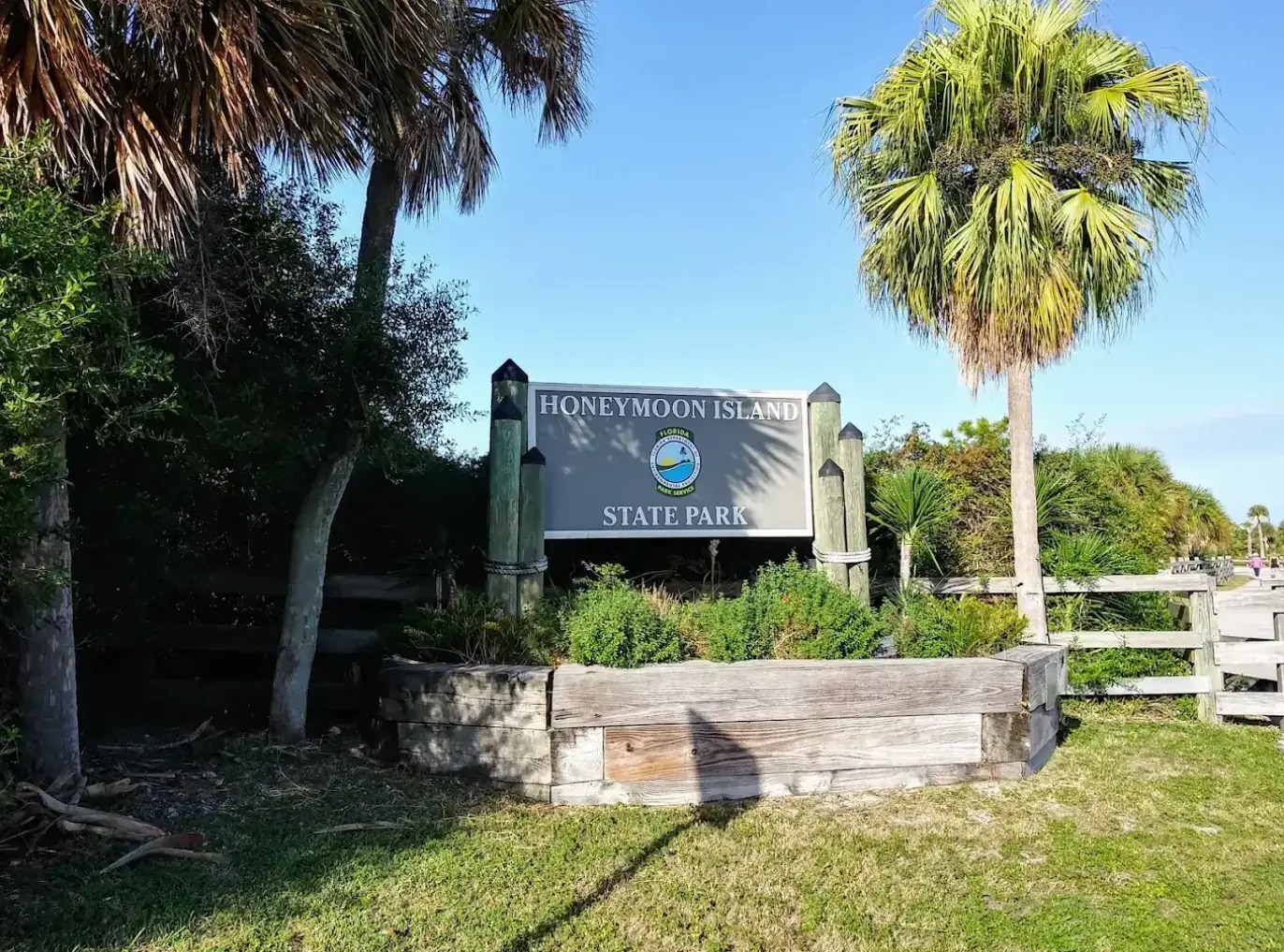
1. Honeymoon Island State Park (45 min)
A barrier island with pristine beaches, nature trails, and excellent shelling. Full-hookup campground with beach access.
Address:** 1 Causeway Blvd, Dunedin, FL 34698

Honeymoon Island State Park sign surrounded by palm trees and greenery


2. Rainbow Springs State Park (1.5 hrs)
Famous for crystal-clear springs perfect for snorkeling and kayaking. Great for families.
Address:** 19158 SW 81st Pl, Dunnellon, FL 34432

3. Myakka River State Park (1 hr)
One of Florida’s oldest parks — airboat tours, hiking, and wildlife viewing. Outstanding for stargazing.
Address:** 13208 State Rd 72, Sarasota, FL 34241

4. Caladesi Island State Park (30 min)
Accessible only by boat — untouched beaches and peaceful nature.
Address:** 1 Causeway Blvd

5. Withlacoochee State Forest (1 hr)
Remote camping, hiking trails, and excellent birding. Less crowded than state parks.

6. Oscar Scherer State Park (30 min)
Cycling and hiking paradise. Clean facilities and friendly staff.

7. Lithia Springs (1 hr)
Natural spring swimming with picnic areas. Perfect day trip.

8. Cayo Costa State Park (2 hrs)
Remote island accessible by ferry. White sand beaches and shells galore.

9. St. Andrews State Park (4 hrs)
Panhandle gem — emerald waters and sugar sand. Worth the drive.

10. Big Cypress National Preserve (2 hrs)
Wildlife galore — alligators, panthers, and birds. True wilderness camping.